Echo cancellation
Compare playback echo with AEC disabled and enabled.
Original price was: 159,00€.149,00€Current price is: 149,00€.
Preorder: V2 dispatch schedule to be confirmed. Not for immediate dispatch.
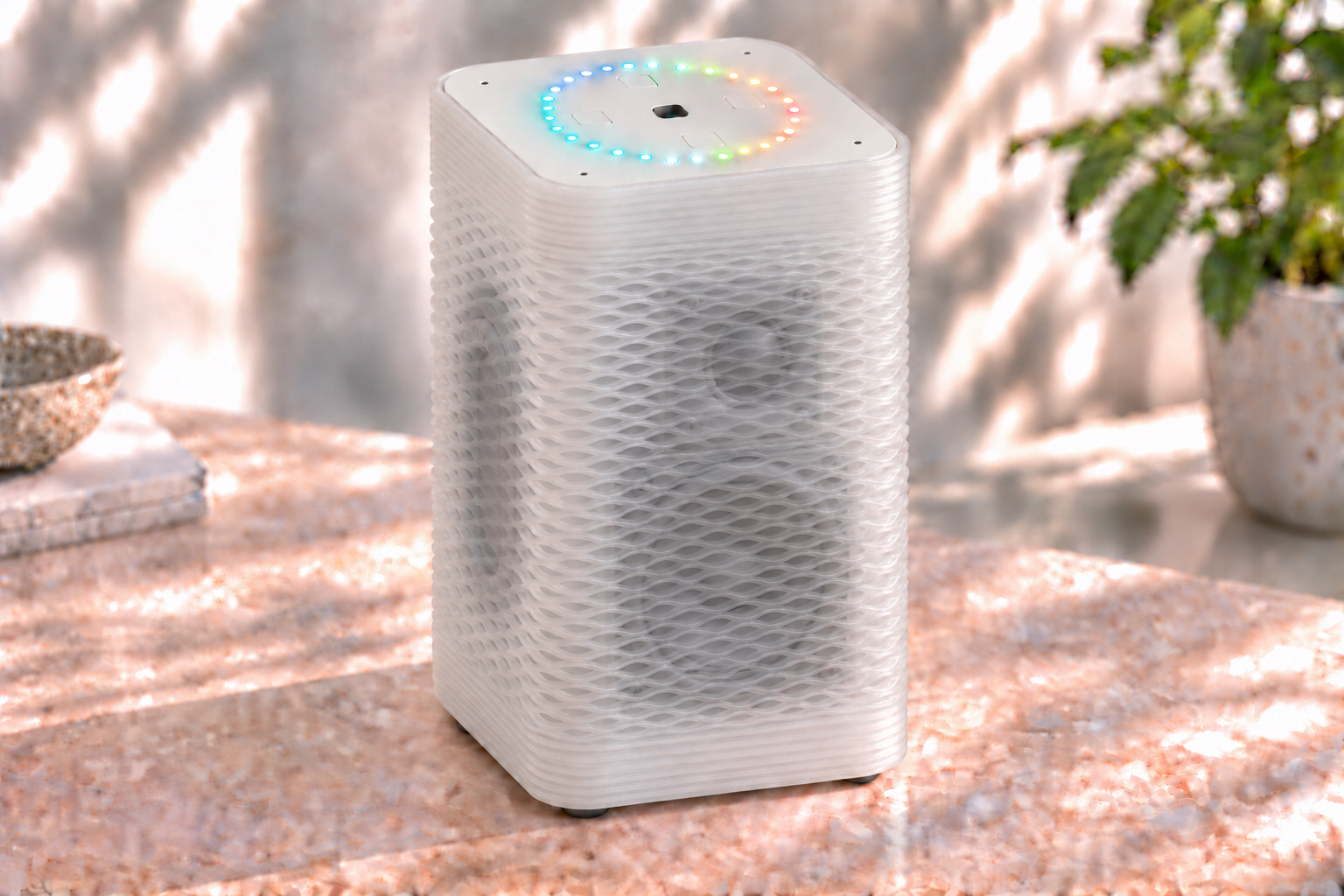
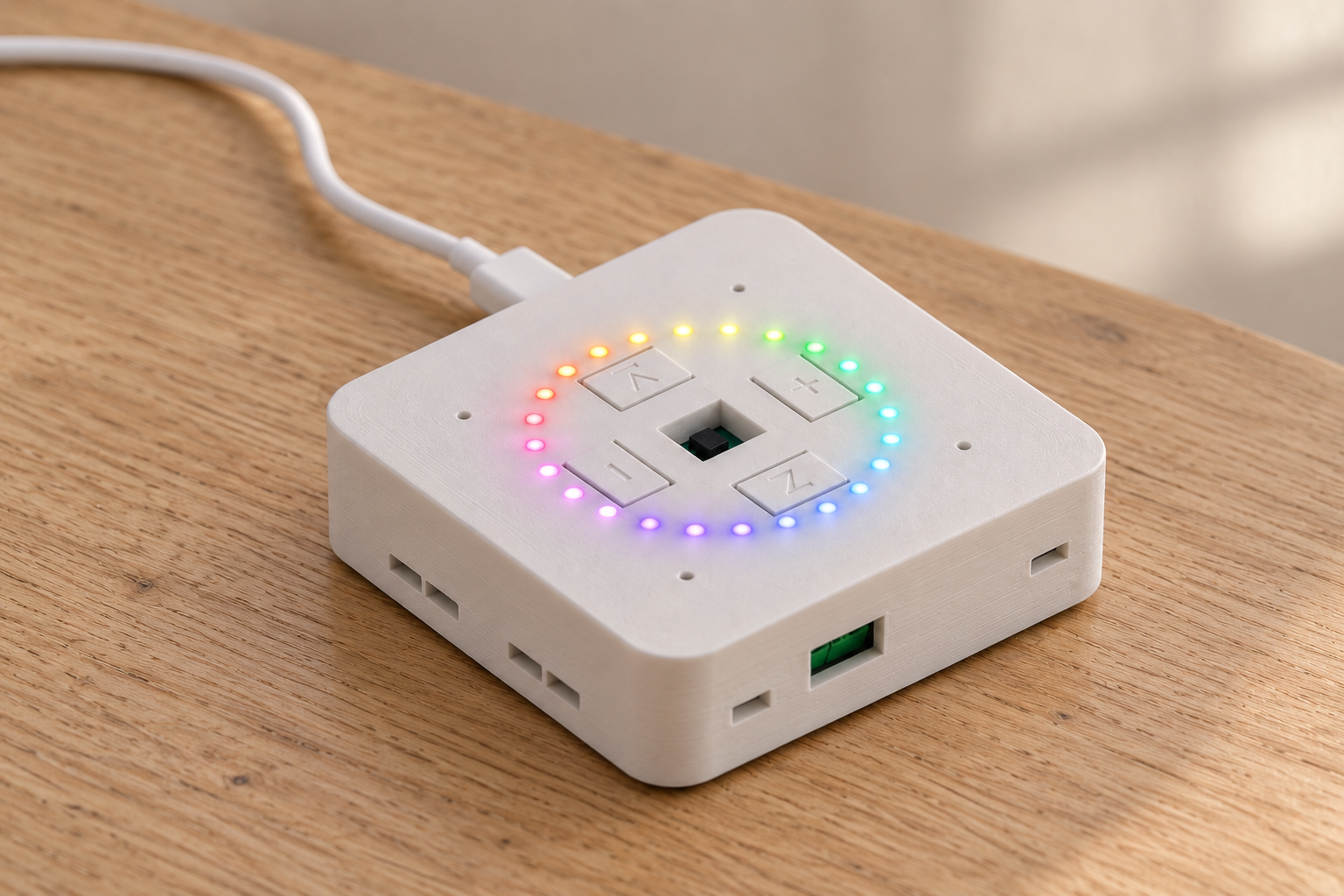
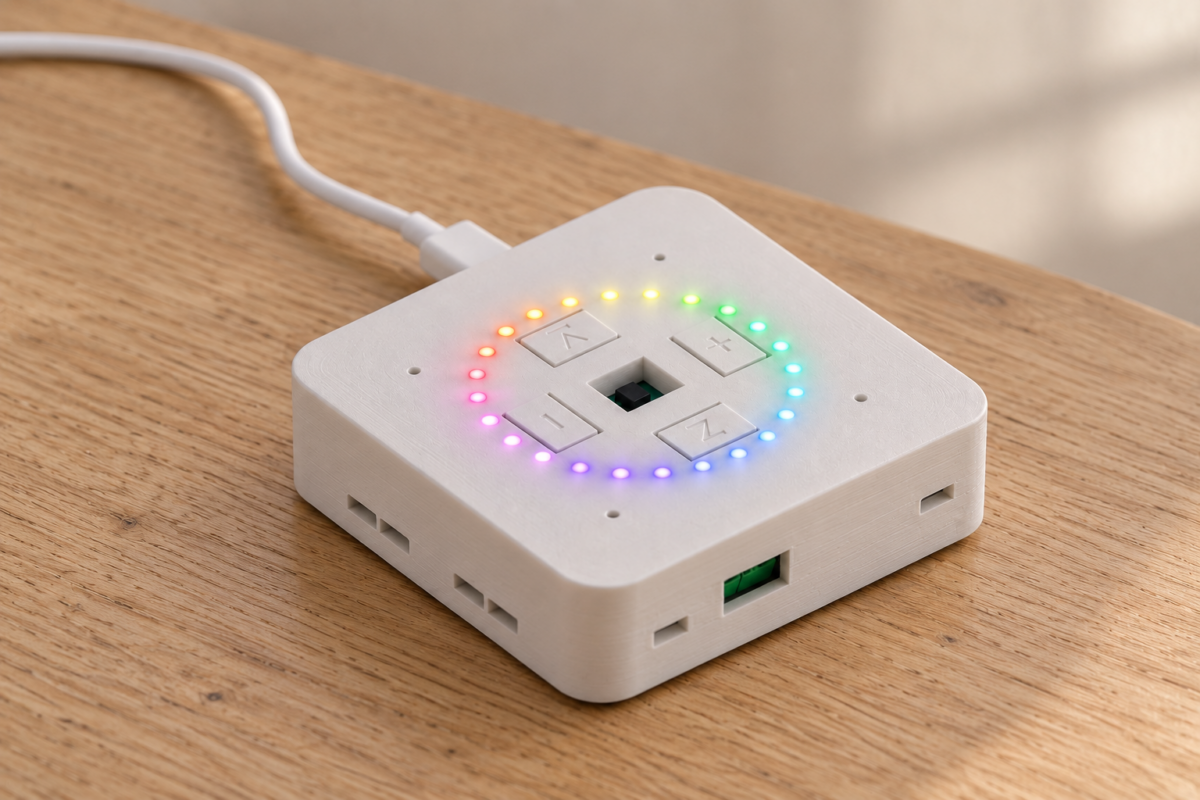
The premium Voice DSP+ V2 experience, assembled. Four microphones, dedicated XVF3800 voice processing, included CoreZero S3, gesture control and 24 RGB LEDs. A two-way system with one mid-bass driver, one tweeter, two passive radiators, active crossover and dynamic DSP equalization.
Preorder: €159.00 €149.00. Dispatch schedule to be confirmed. Not for immediate dispatch. V2 development and final tuning are in progress. Requires your own Home Assistant server for Home Assistant use.
Full Speaker / Voice DSP+ V2
Compact Voice at the top. A dedicated two-way speaker system underneath. An assembled design for natural voice interaction and music you actually want to listen to.
The larger enclosure brings the microphone interface, controller and powerful audio system together. No enclosure building or driver assembly required in the planned pack.
Preorder: €159.00 €149.00. Dispatch schedule to be confirmed. Not for immediate dispatch. V2 development and final tuning are in progress.
Two-way sound
The V2 concept uses the two main amplifier channels separately: one for the mid-bass driver and one for the tweeter. Active crossover filtering divides the frequency range, while dynamic DSP equalization shapes the playback response.
This is one two-way speaker system, not a left/right stereo pair. The two passive radiators support bass reproduction without being electrically driven.
Final tuning and enclosure validation are still in progress. No frequency-response, SPL or bass-extension measurement is claimed here.
Dedicated voice processing
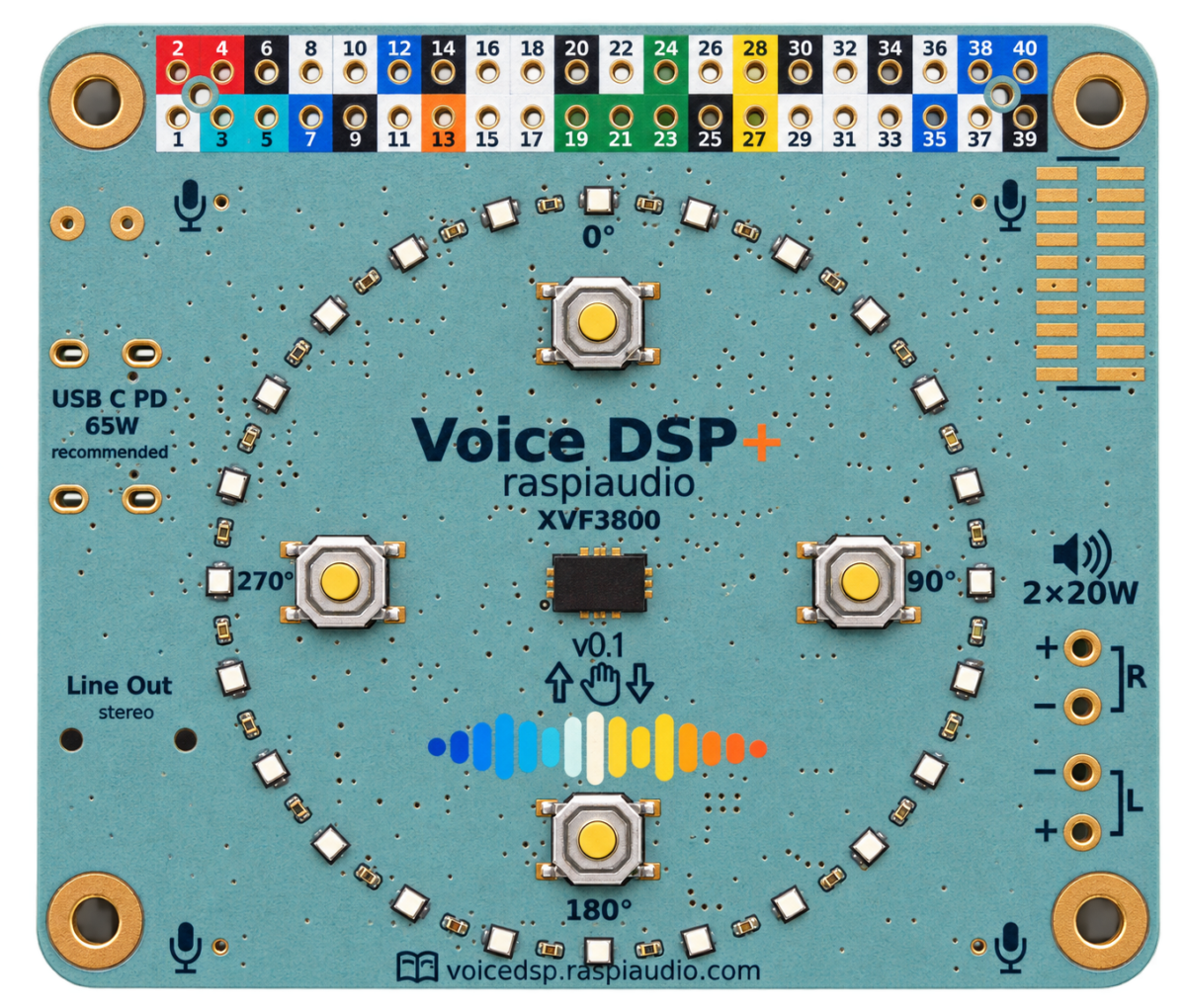
A dedicated audio processor handles the microphone array before audio reaches your assistant or computer. The integrated microphones form a 44 × 44 mm square.
Gesture mappings, button actions and LED behaviour depend on the installed firmware. Gesture control is not room-presence detection.
The XVF3800 processes audio, not language. Wake words run on the ESP32-S3, Raspberry Pi or host. Speech recognition, answers and speech synthesis belong to your chosen application. Performance depends on the room, placement, playback level and software.
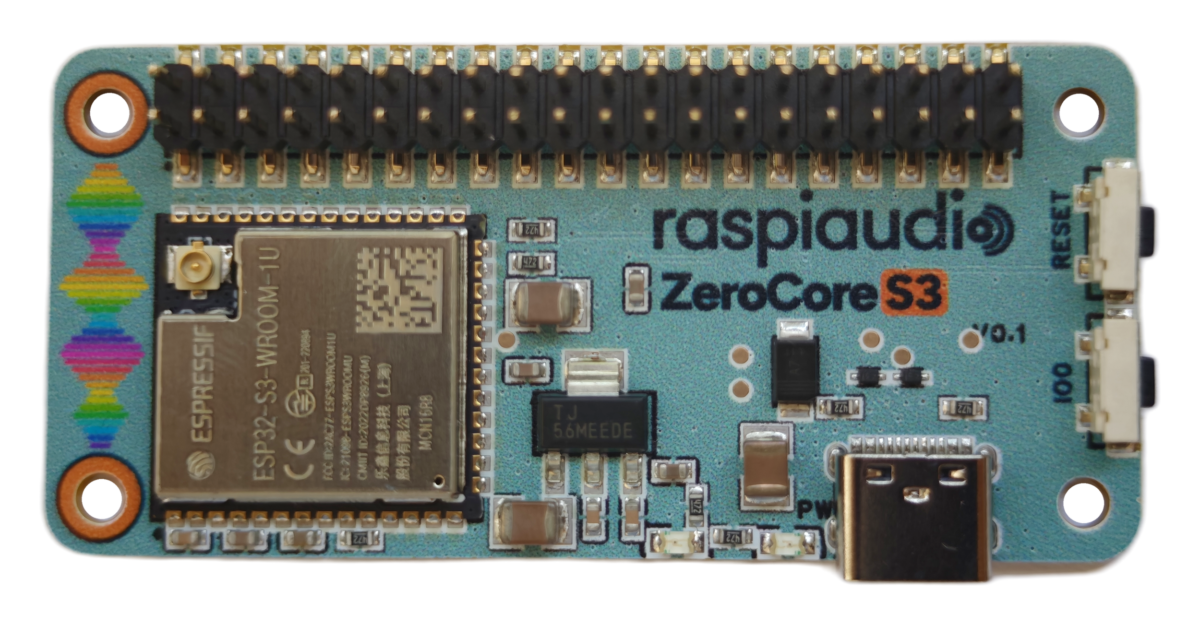
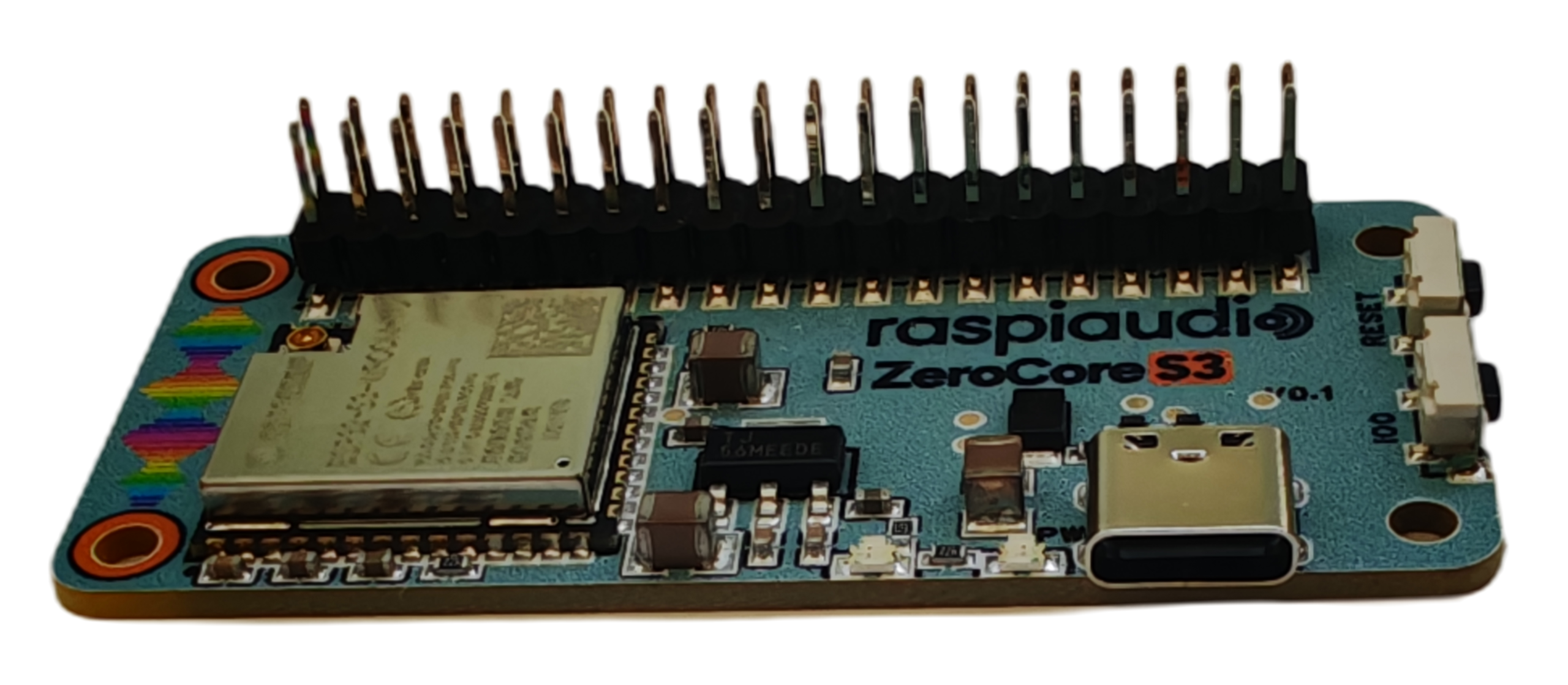
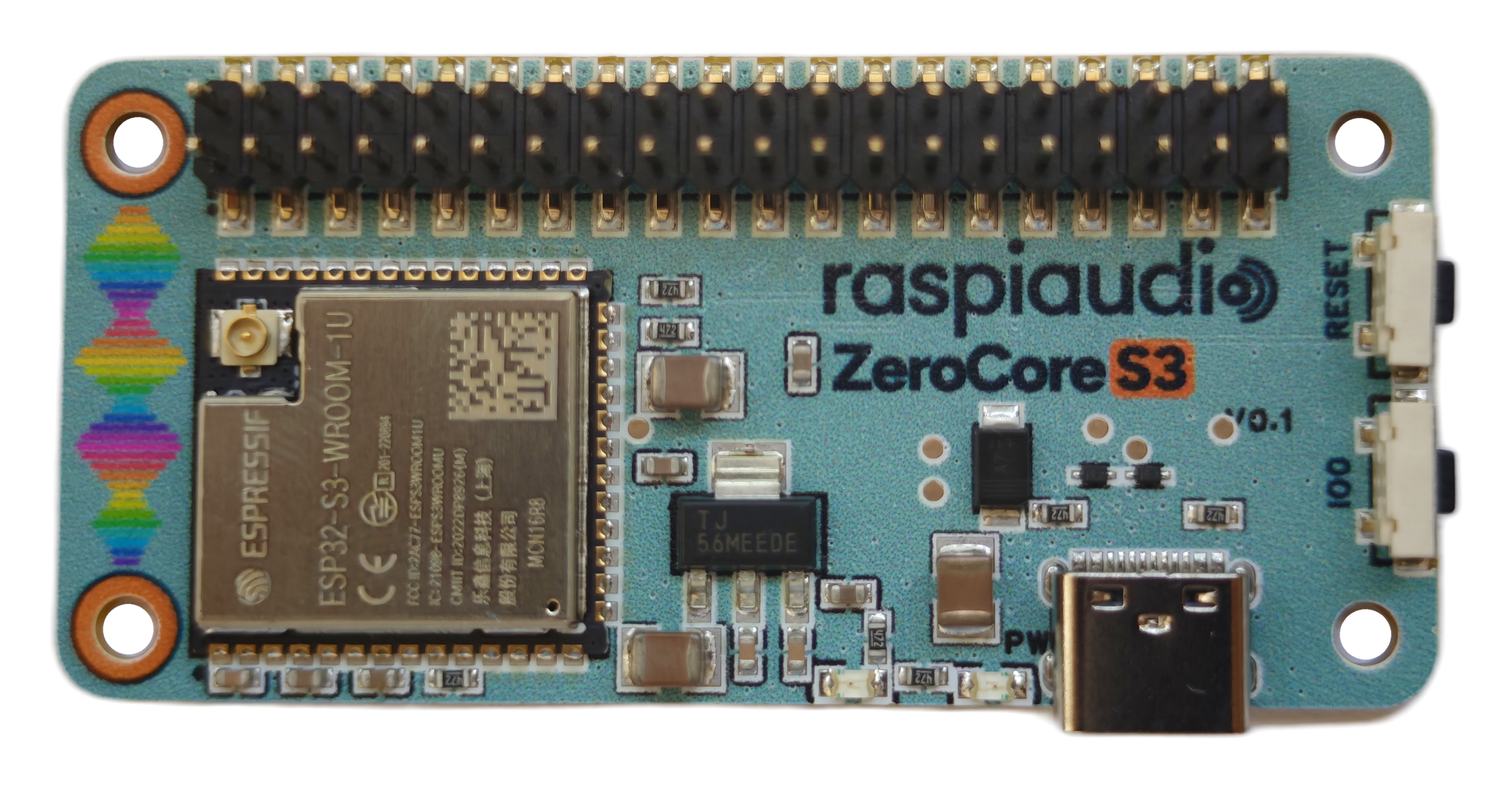
The included CoreZero S3 runs ESPHome and the voice-satellite application. Connect it to your Wi-Fi and configure your Home Assistant Assist pipeline. Local or cloud speech services are your choice.
The audio DSP handles the four microphones and playback-echo reduction. The controller or host handles wake-word detection; the XVF3800 does not run the wake-word model.
With compatible firmware, use the system as a USB microphone and playback device for voice applications on a computer. Follow revision-specific instructions when switching between USB and ESPHome operation.
For development, the underlying board retains Raspberry Pi I2S/I2C integration and configurable controls. The assembled pack does not include a Raspberry Pi.
Your Home Assistant server, network and configured Assist pipeline. Computer-based use requires your own computer and application.
The included 45 W charger powers the complete system; it does not provide 50 W of continuous acoustic output. The underlying amplifier’s 2 × 25 W rating is a capability under specified supply/load conditions, not a measured speaker-system output.
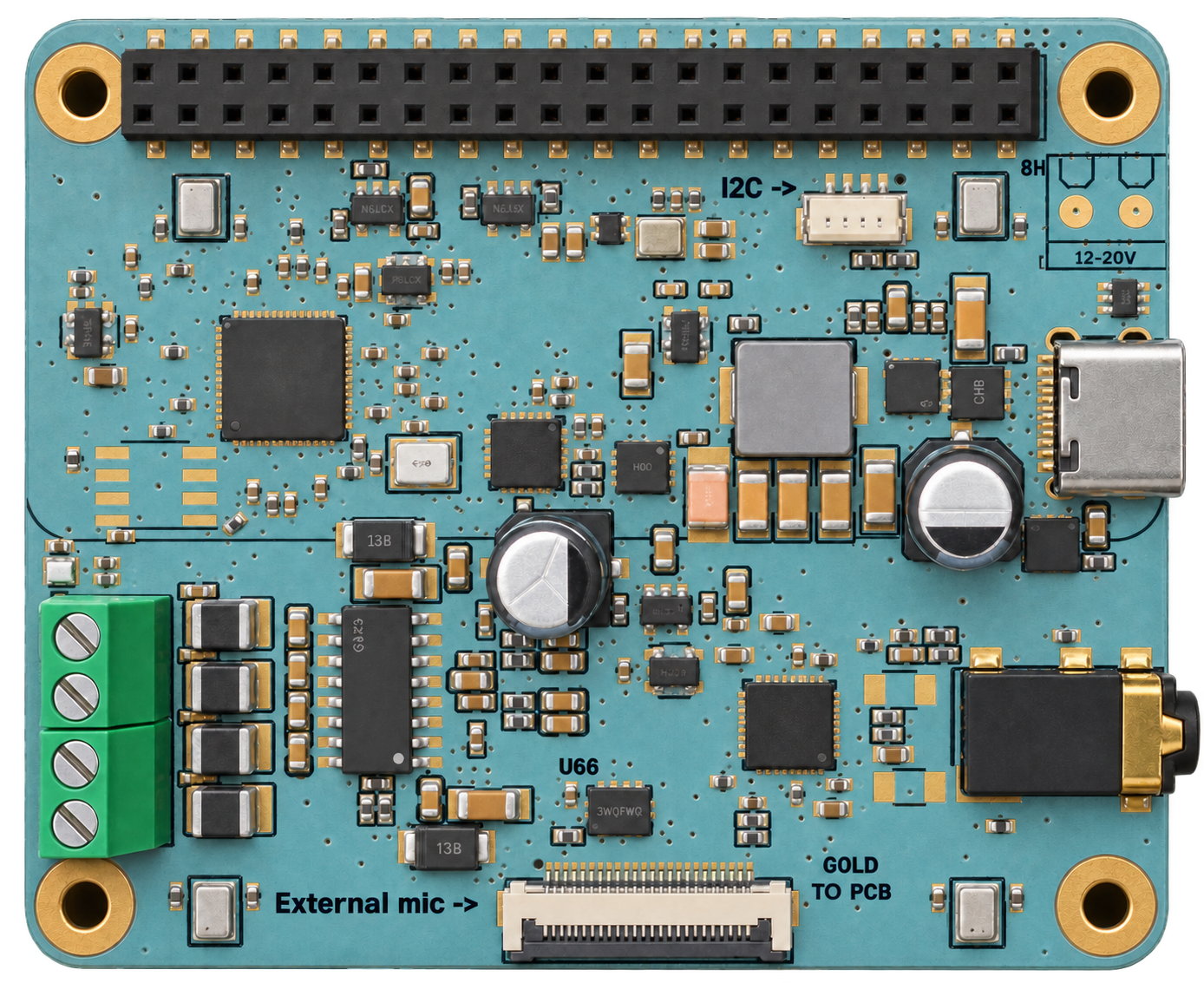
| Audio processor | XMOS XVF3800 dedicated four-microphone voice DSP |
|---|---|
| Controller included | CoreZero S3: ESP32-S3, 16 MB flash, 8 MB PSRAM, 2.4 GHz Wi-Fi |
| High-power outputs | 2 × 25 W amplifier capability at 4 ohms / 20 V with suitable supply and drivers. Actual continuous output is limited by the complete power and thermal design. |
| Small speaker outputs | Separate 2 × 2 W stereo output path |
| Jack | 3.5 mm stereo audio output with connection detection and software-controlled routing |
| Computer mode | USB microphone + playback device with compatible USB firmware |
| Advanced integration | Raspberry Pi 40-pin interface, I2S audio, I2C control and SPI integration. A fitted header and revision-specific software are required. |
| User controls | 24 RGB LEDs, four buttons, PAJ7620U2 gesture sensor |
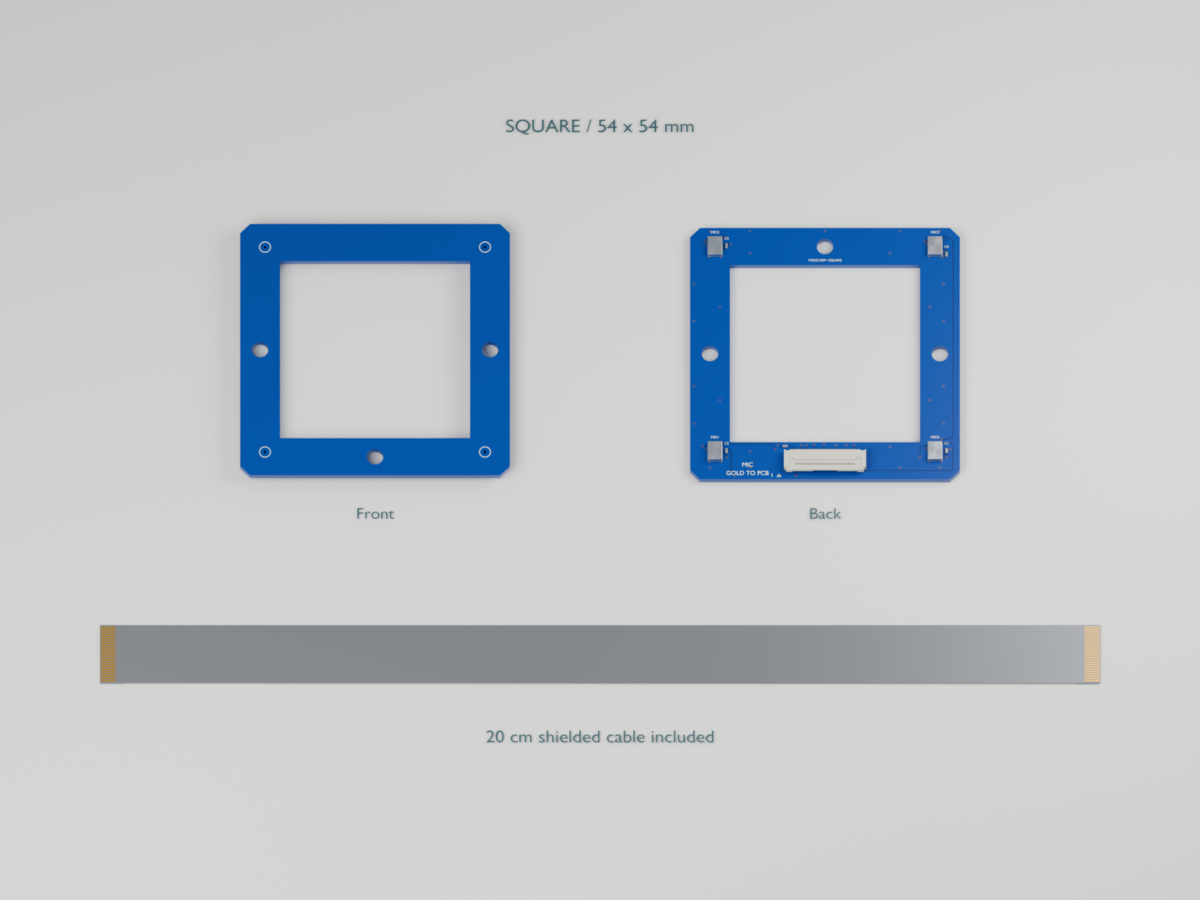
| External microphones | Optional LINE or SQUARE four-microphone array via FPC24. Internal or external array active at a time; matching firmware required. |
Hear the difference
Compare playback echo with AEC disabled and enabled.
A speech recording with fan-like background noise, before and after processing.
Local Hey Jarvis detection on a Raspberry Pi, not on the XVF3800.
These existing Voice DSP+ demonstrations illustrate the processing approach. They are not measurements or qualification of the new V2 enclosure or extension arrays.
Firmware and ownership
Use Home Assistant with your preferred Assist pipeline, or choose USB sound-card mode for a computer. The included CoreZero S3 connects over Wi-Fi and runs the voice-satellite application; the XVF3800 takes care of the microphone audio front end. No Raspberry Pi is needed inside the device.
Two firmware roles: the DSP USB loader updates compatible standalone audio firmware. It does not install the Home Assistant application on the ESP32-S3. Use the controller installer for that application.
Choose firmware for the exact hardware revision. Current V1 images are not V2 updates. The V2 software integration is in progress; the planned shipping setup includes ESPHome preloaded. Wi-Fi pairing and your Home Assistant server configuration are still required.
The planned Full Speaker pack is supplied assembled. You still configure Wi-Fi, Home Assistant and your chosen voice pipeline.
No. The image shows the design direction. Mechanical details, material appearance and acoustic tuning may change.
Compact Voice prioritizes small size and spoken replies. Full Speaker adds a larger dedicated two-way playback system for more satisfying music and voice playback.
 Out of stock