0,00€0
RASPIAUDIODSPi BoardsGet launch news ↗
Made for DSPi by Weeb Labs ↗Credit to its creators and contributors. We make the hardware, not DSPi. Not affiliated with Weeb Labs.

Choose. Swap. Expand.

MADE FOR DSPi / IN DEVELOPMENT

DSPi Motherboard by RASPIAUDIO

Small box.
Sound, your way.

A plug-and-play dedicated audio processor for speaker EQ, active crossovers and time alignment.

Pico 2 runs DSPi with a modular approach: your choice of DAC delivers the sound you need for your setup.

Stereo tuningActive speakersMultichannel audio

In development. Join the list for launch news and availability updates.

BOARD OR ENCLOSED KITDEVELOPMENT RENDER
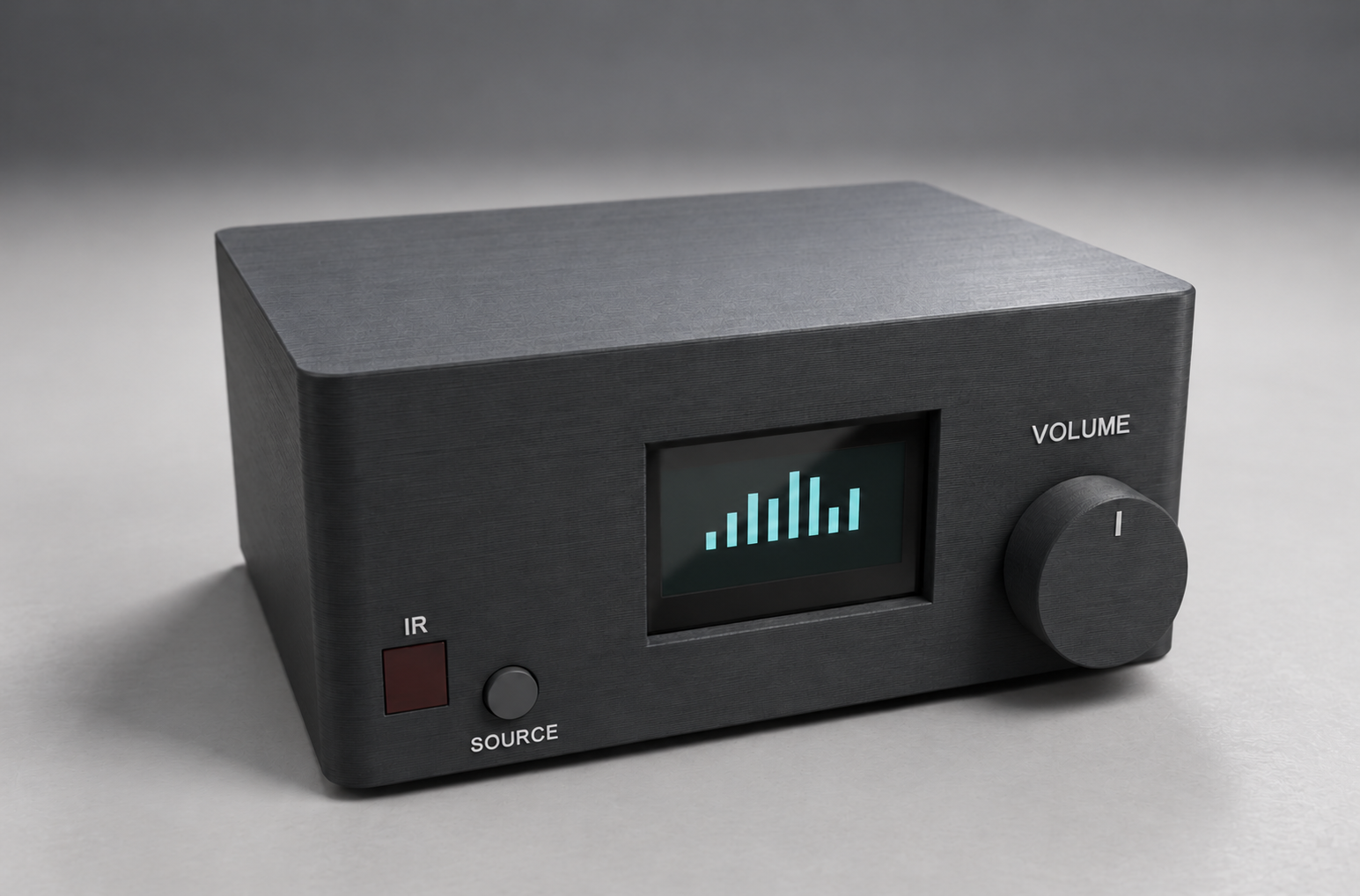
Anthracite enclosure concept with screen, source button and shallow volume encoder
Dedicated audio. In one compact box.AI-generated enclosure concept, not a manufactured unit. Illustrative display.

WHY DSPi?

No Linux required.

Dedicated microcontroller. Built for audio processing, not a full computer.

No OS to boot. DSPi runs directly on the Pico 2. Designed for fast startup; timing to be measured.

Shape your sound. Open-source EQ, IIR crossovers, routing and delay.

01 / CONNECT

Inputs
Outputs

The base motherboard handles digital audio. Stack a compatible DAC / ADC board on its 40-pin header to add analog outputs, inputs, or both.

Base motherboardDAC / ADC extensions
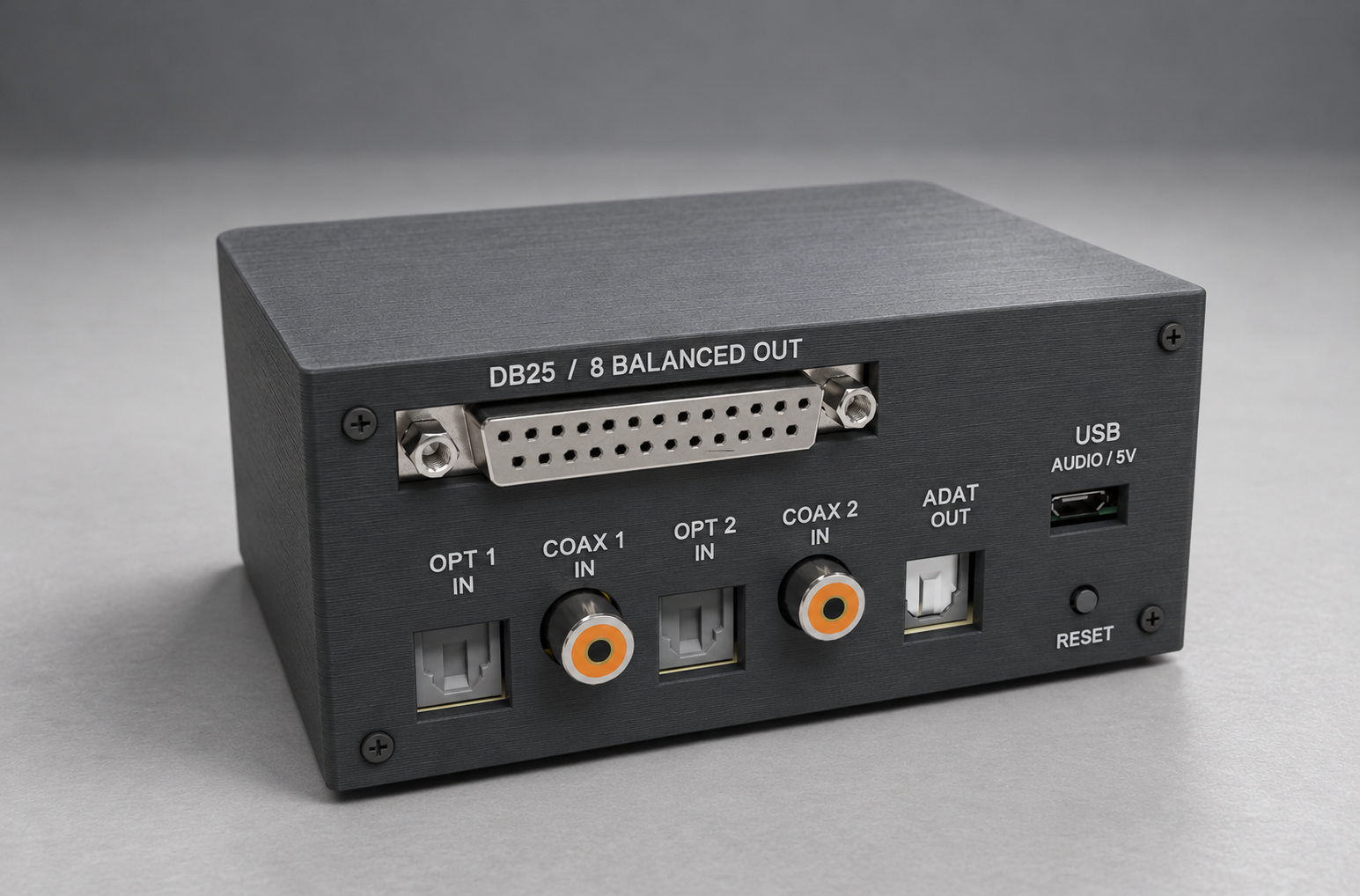
Rear concept: upper DB25 balanced output; lower optical and coax inputs 1 and 2, ADAT output, micro-USB and reset
AI-generated enclosure mockup. Connector layout and operation remain to be qualified.

BASE MOTHERBOARD / DIGITAL AUDIO

IN / USB audio
Connect your computer. The same micro-USB port handles setup and power.
IN / Optical / coax × 2
Two selectable S/PDIF paths; optical or coax per path, not simultaneous inputs.
OUT / Optical ADAT
Planned multichannel digital output.

STACK-ON DAC / ADC / ANALOG AUDIO

OUT / Add a DAC
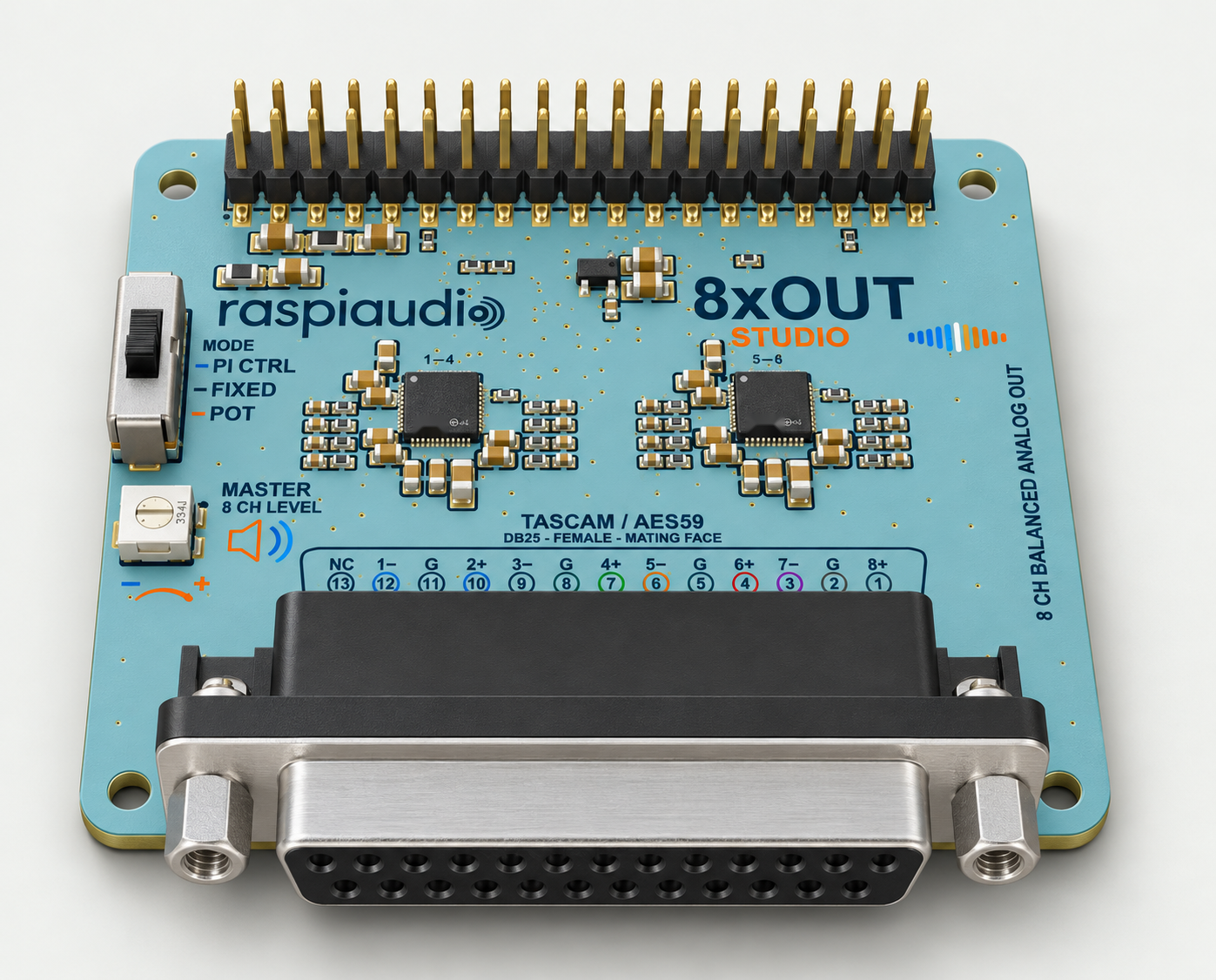
Shown here: the Studio board adds 8 balanced outputs via DB25. The DB25 belongs to the expansion board, not the base motherboard.
IN / Add an ADC
Choose a board with analog inputs, or a combined ADC / DAC for both inputs and outputs.
Your board, your connections
Balanced or unbalanced, depending on your expansion board. Compatibility testing is in progress. Choose your DAC / ADC ↗

02 / BUILD ON WHAT MATTERS

Keep the quality.
Change the possibilities.

Good DACs are worth keeping. An affordable processing base and a separate 40-pin audio shield let you change one without replacing everything.

ONE PLATFORM / YOUR AUDIOMODULAR ASSEMBLY CONCEPT
Native CAD: the Studio DB25 DAC seated above the Pico 2 motherboard on the 40-pin header
Native CAD geometry. Assembly concept.

A BETTER WAY TO BUILD YOUR SYSTEM

Separate the brain.
Keep the sound.

  1. 01
    MOTHERBOARD + PICO 2

    Start with the brain.

    DSPi processing, digital connections and controls. One affordable base.

  2. 02
    40-PIN AUDIO EXPANSION

    Add your sound.

    Choose a compatible DAC / ADC. Here, the Studio board docks onto the header.

  3. 03
    SHOWN WITH 8xOUT STUDIO

    Eight balanced outputs.

    Dual SABRE DACs. DB25 to XLR or TRS. Keep your audio board as your setup evolves.

Find your DAC / ADC ↗
Motherboard in blue. Audio expansion in copper.40-PIN MODULAR CONCEPT

Assembly illustration from the native CAD models. Compatibility, stacking and future processor upgrades require hardware and firmware validation, not just a matching header.

Specs & development status What is tested, what comes next

Socketed Pico 2: RP2350, dual-core Cortex-M33 at 150 MHz nominal, 520 KB RAM, 4 MB flash. No Wi-Fi or Bluetooth.

Audio expansion
40-pin header; up to 8 I2S inputs + 8 outputs via a compatible ADC/DAC shield.
Digital inputs
2 optical/coax paths, manual media selection. S/PDIF first; optical ADAT reception needs firmware work.
Digital output
1 optical ADAT output on GP28.
USB
Pico micro-USB for power, audio and configuration. Final audio formats to test.
Front-panel connections
I2C OLED, push encoder, source button, IR receiver and 3 source LEDs.
Board format
100 × 65.39 mm CAD outline. Manual Studio / 8IN8OUT profile selection.

Still to testComplete audio path, rates, clocks, DAC startup, optical I/O, power budget, physical controls/display and mechanical fit.

8xOUT Studio board render with its balanced DB25 output

THE FEATURED AUDIO BOARD

8xOUT Studio.
Built for balanced audio.

Dual ESS SABRE DACs. 8 balanced outputs. 124 dB DNR.*

*Typical DAC dynamic range, A-weighted, four-channel differential mode per chip. Not a measured system SNR or guaranteed board result. ESS datasheet.

Explore 8xOUT Studio ↗

Coming soon. Integration with the DSPi motherboard is in progress.

DB25 / COMPACT & VERSATILE

One connector.
Your choice of cable.

Break out to XLR, 1/4-inch TRS jacks or RCA. XLR/TRS keep the balanced connection; RCA is unbalanced and requires suitable wiring. Cables not included.

Manufacturer photos: Hosa. Reference examples, no affiliation. Reuse rights must be cleared before public release.
Hosa manufacturer photo of a DB25 to eight XLR male breakout cable
8 XLR male / Hosa DTM-800 ↗
Hosa manufacturer photo of a DB25 to eight balanced quarter-inch TRS jack plugs
8 TRS 1/4-inch / Hosa DTP-800 ↗

A DIFFERENT AUDIO JOB?

Same base.
New possibilities.

No need for balanced outputs? Need analog inputs? Keep your DSPi motherboard and plug in a different DAC / ADC. Compatibility testing is in progress.

COMING SOON

Studio 8xIN

Balanced analog inputs.

Product preview to come. Stacking with 8xOUT Studio is planned, not yet validated.
IN DEVELOPMENT

03 / CHOOSE YOUR PACKAGE

What you get
in the box.

Start with the motherboard, or choose the complete Studio package. Planned contents for the upcoming release.

FULL DAC STUDIO / BALANCED

The complete Studio setup.

  • DSPi-compatible motherboard
  • 8xOUT Studio DAC: 8 balanced outputs
  • 3D-printed casing
  • Simple I2C monochrome screen
  • Preloaded DSPi firmware

Before you ask.

Does it replace a full Raspberry Pi?

For EQ, IIR crossovers, routing and delay in a dedicated audio device: that is the goal. For long FIR convolution, demanding CamillaDSP pipelines, Linux apps or network streaming: keep a suitably powered Pi or computer. See DSPi and CamillaDSP FIR.