For AI conversations
Select Voice DSP+ as the microphone and speaker in your AI application, then talk naturally while the assistant answers aloud.
Original price was: 99,90€.89,90€Current price is: 89,90€.
Availability: Limited pre-order - estimated shipping from 15 October 2026.
A dedicated four-microphone sound card for AI voice, dictation and video calls. Plug it into USB as a driver-free microphone and speaker, or connect it to a Raspberry Pi 40-pin header for direct I2S audio, SPI boot and I2C control.
Voice DSP+ in 90 seconds: USB plug-and-play, Raspberry Pi control, plus real AEC OFF/ON, noise-suppression OFF/ON and 16 m far-field demonstrations.
Four microphones, speaker playback and real-time voice processing on one board. Select it as the microphone and speaker in compatible AI voice and conferencing apps—for example ChatGPT voice conversations, Gemini Live, Claude voice mode, Zoom, Teams or Meet.
This is a backorder and will not ship immediately. Quantities in the first production run will be limited. The design is complete and working; in early August 2026 we will confirm how many units to manufacture from the pre-orders received.
Voice DSP+ is a complete two-way audio interface made for products that must listen and speak at the same time. It captures your voice, processes it, sends clean audio to the application and plays the response through a speaker or headphones.
Select Voice DSP+ as the microphone and speaker in your AI application, then talk naturally while the assistant answers aloud.
Use one device for voice capture and playback in Zoom, Google Meet, Microsoft Teams and other conferencing tools.
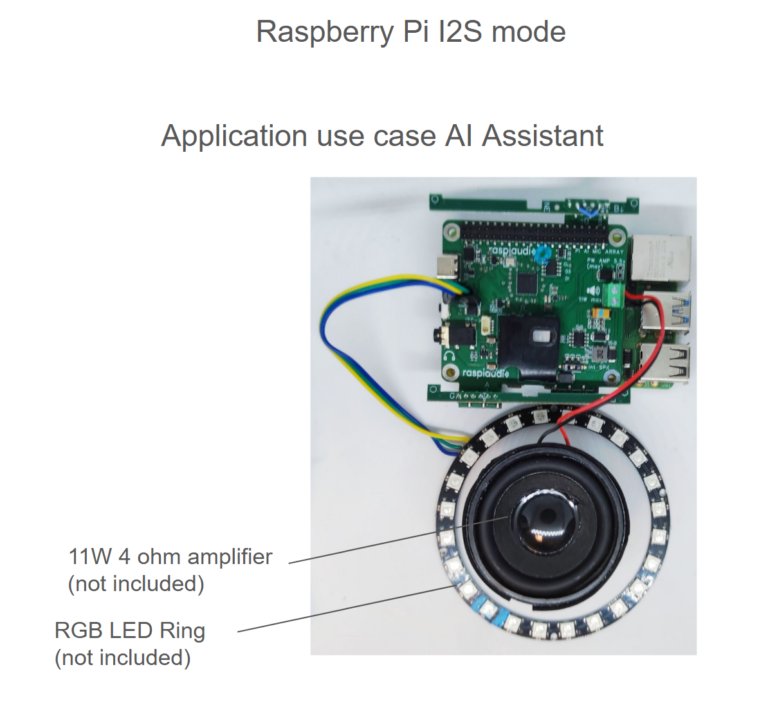
Build it into a robot, kiosk, tabletop assistant, room controller or any Raspberry Pi voice product.
Voice DSP+ combines processed voice capture, audio playback and embedded control, so the same board can move from a USB prototype to an integrated Raspberry Pi product.
Add listening, speech capture, sound direction and a real speaker output to desktop, mobile, service or companion robots.
Use the processed microphone channels for speech recognition and the onboard or external speaker path for natural replies and prompts.
Build self-service terminals, vending machines and interactive displays with front-facing LINE or room-aware SQUARE microphone geometry.
USB microphone and playback, beamforming, AEC and noise reduction support clear two-way conversations from one compact audio board.
Give educational devices, tabletop companions and interactive objects reliable voice input plus built-in audio feedback.
Create voice-control front ends for counters, workshops and commercial equipment, with enclosure acoustics validated for the final environment.
Connect the board to a Windows, macOS or Linux computer. It is detected as a standard USB microphone and speaker, with no product-specific driver to install.
Choose a mode, connect Voice DSP+ and install it directly from Chrome or Edge. No command line or developer tools required.
Launch the Web UpdaterWith the current validated firmware, the device may appear as PI AI MIC Assistant Auto.
Mount Voice DSP+ on the standard Raspberry Pi 40-pin connector for a direct board-level audio path, without adding a separate USB audio adapter.
Start with USB for the fastest result, then move to Raspberry Pi mode when your product needs direct I2S, SPI and I2C access.
Every part of the path is designed to work together, including the playback reference used for acoustic echo cancellation.
The XMOS XVF3800 does the hard audio work in real time, before sound reaches the AI or call application.
AEC uses the playback signal as a reference so the microphone path can suppress the sound produced by the device itself.
Four microphones work together to focus on speech and improve voice capture in real rooms.
AGC keeps speech at a more consistent level as the user moves or speaks more softly.
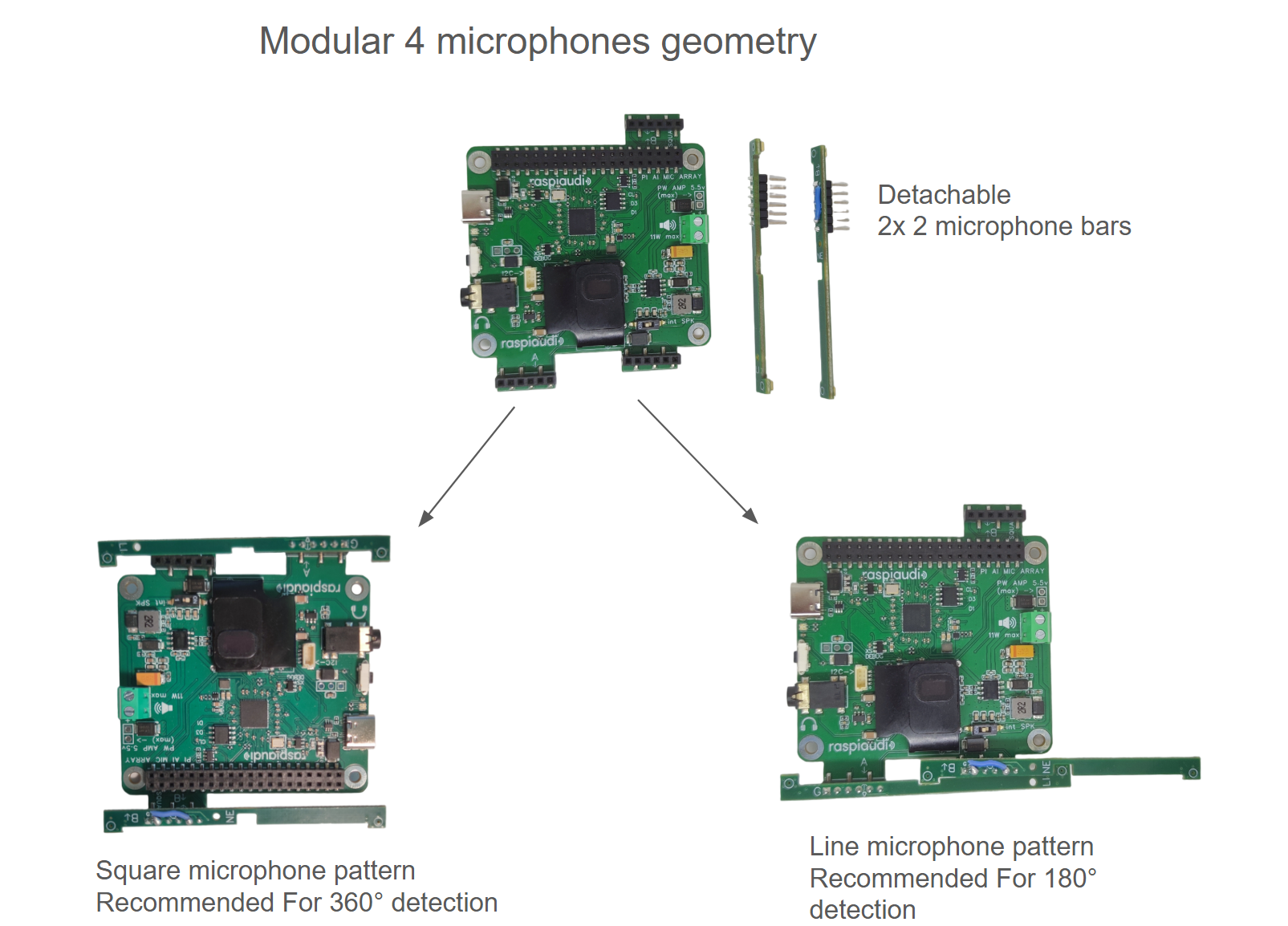
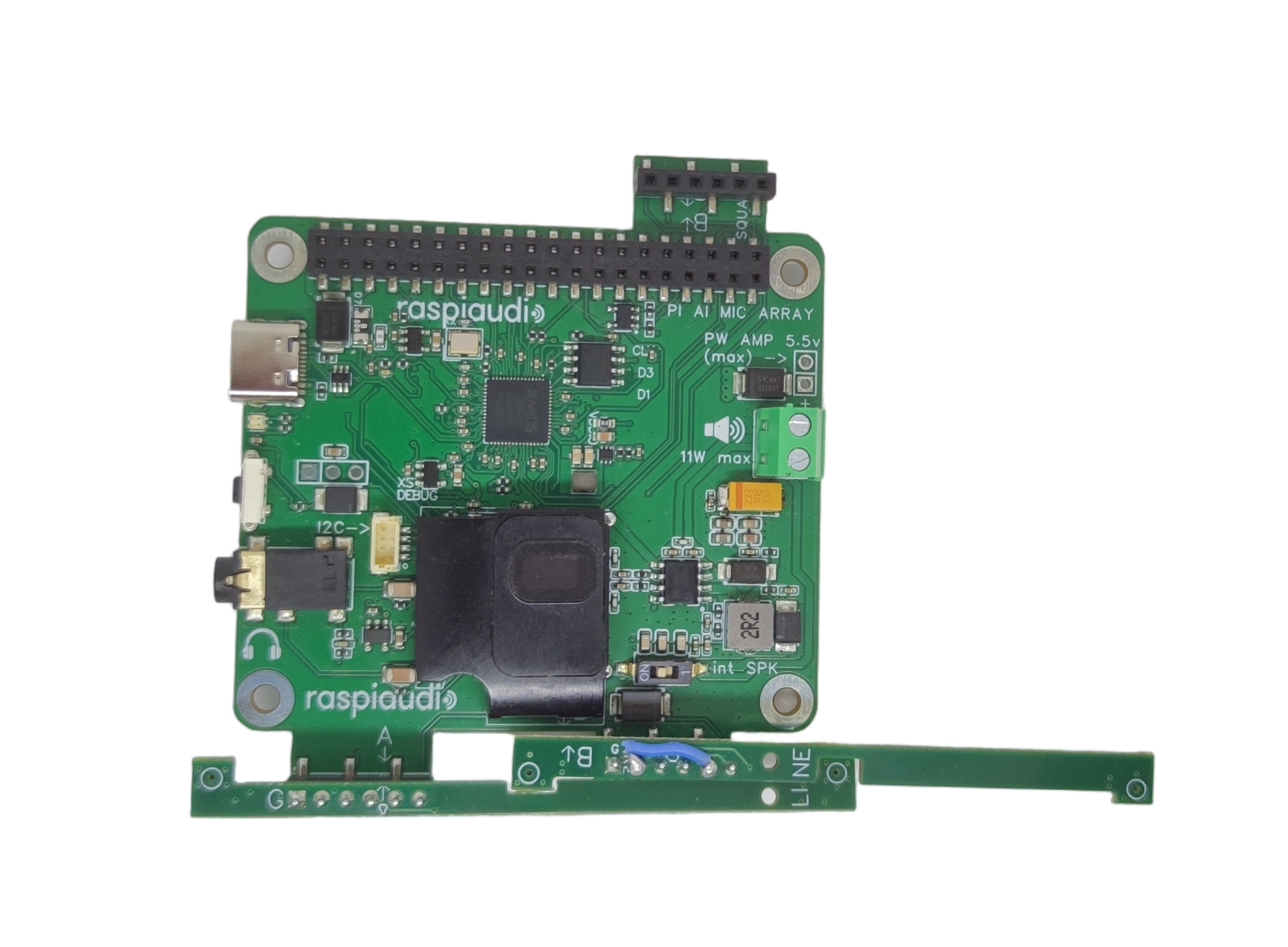
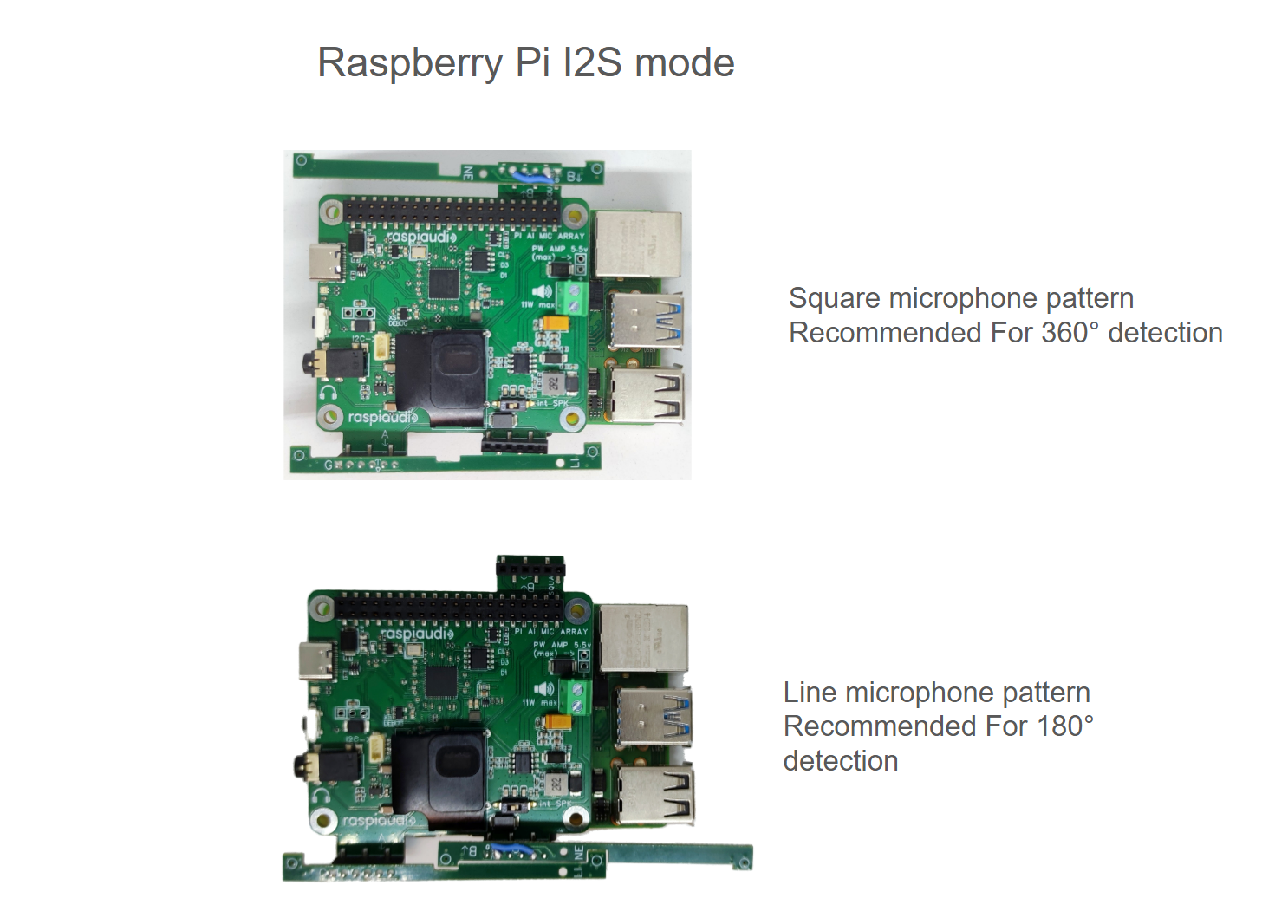
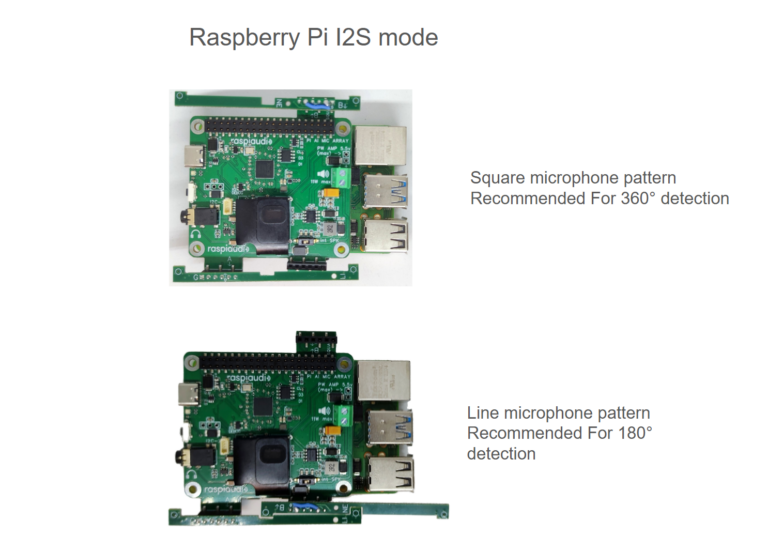
At cold boot, firmware detects the installed LINE or SQUARE module and loads the matching DSP geometry.
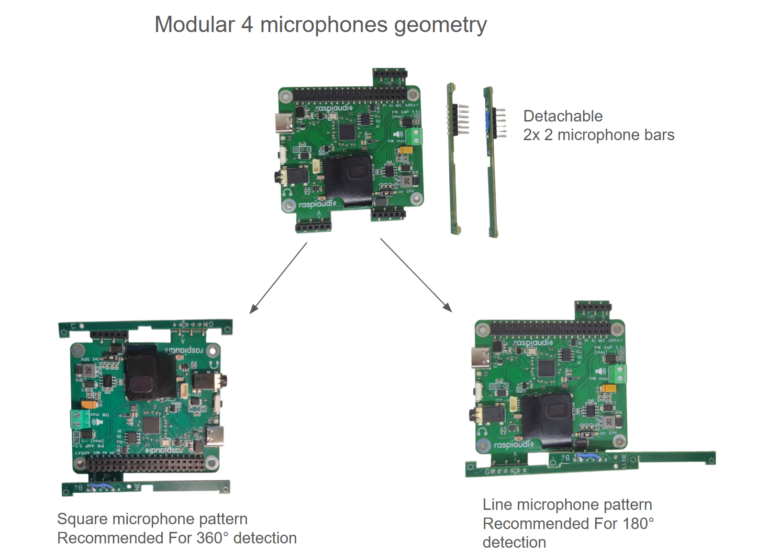
SQUARE is designed for voices around the product. LINE is designed for users mainly in front. Change microphone modules only while the board is powered off.
Hear real captures switch from unprocessed audio to Voice DSP+ noise suppression and acoustic echo cancellation.
A TV speech source is played beside steady pink noise that simulates a fan. The recording switches to Voice DSP+ noise suppression at 7 seconds.
Listen at 7 seconds: the fan-like background falls while the speech remains intelligible. Headphones recommended.
Download the original lossless WAVA hip-hop beat plays through the Voice DSP+ speaker while a separate voice source is captured by the four-microphone array. With AEC enabled, the DSP uses the speaker playback reference to reduce that same beat in the microphone signal while preserving the voice.
The first two seconds of the synchronized recording have been removed, leaving a 26.85-second comparison. The final AEC ON section ends at exactly 21 seconds in the video, then AEC OFF remains active through the end. The speaker beat falls during each AEC ON section while the external voice remains. This enables wake words, voice commands and dictation while music, prompts or responses are playing. Headphones recommended.
The same wake phrase is repeated while the speaker moves progressively farther from Voice DSP+, from 1 m (3.3 ft) to 16 m (52.5 ft). The split screen keeps the test distance visible on the left and the Voice DSP+ hardware fixed on the right. Watch the indicated board LED change colour when the wake word is detected.
How this demo works: the pretrained hey_jarvis model runs on the Raspberry Pi, not in the XMOS firmware. The XVF3800 provides beamforming and the processed 16 kHz voice front end; the Raspberry Pi performs wake-word inference. No additional noise-suppression stage is added on the Pi. View Raspberry Pi setup, architecture and source.
Voice DSP+ is a complete voice interface, not just a microphone array. It can work as a standalone USB sound card or become the audio front end of a Raspberry Pi product.
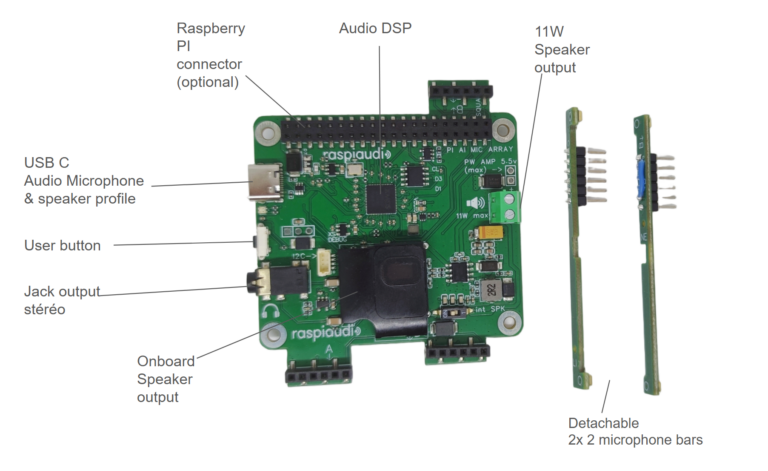
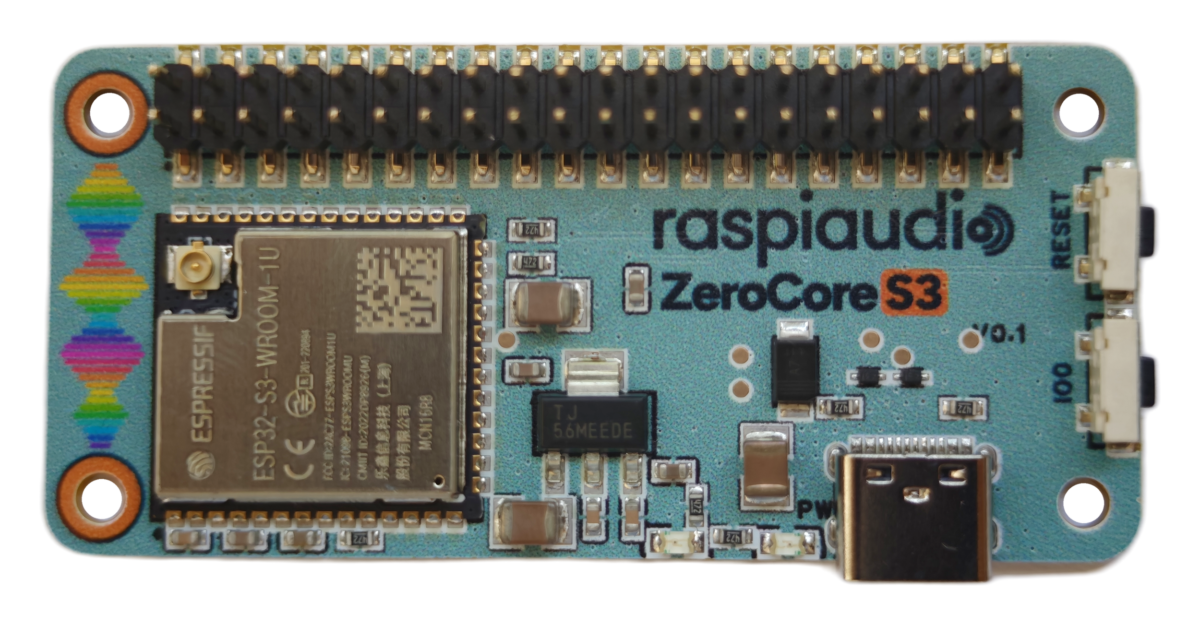
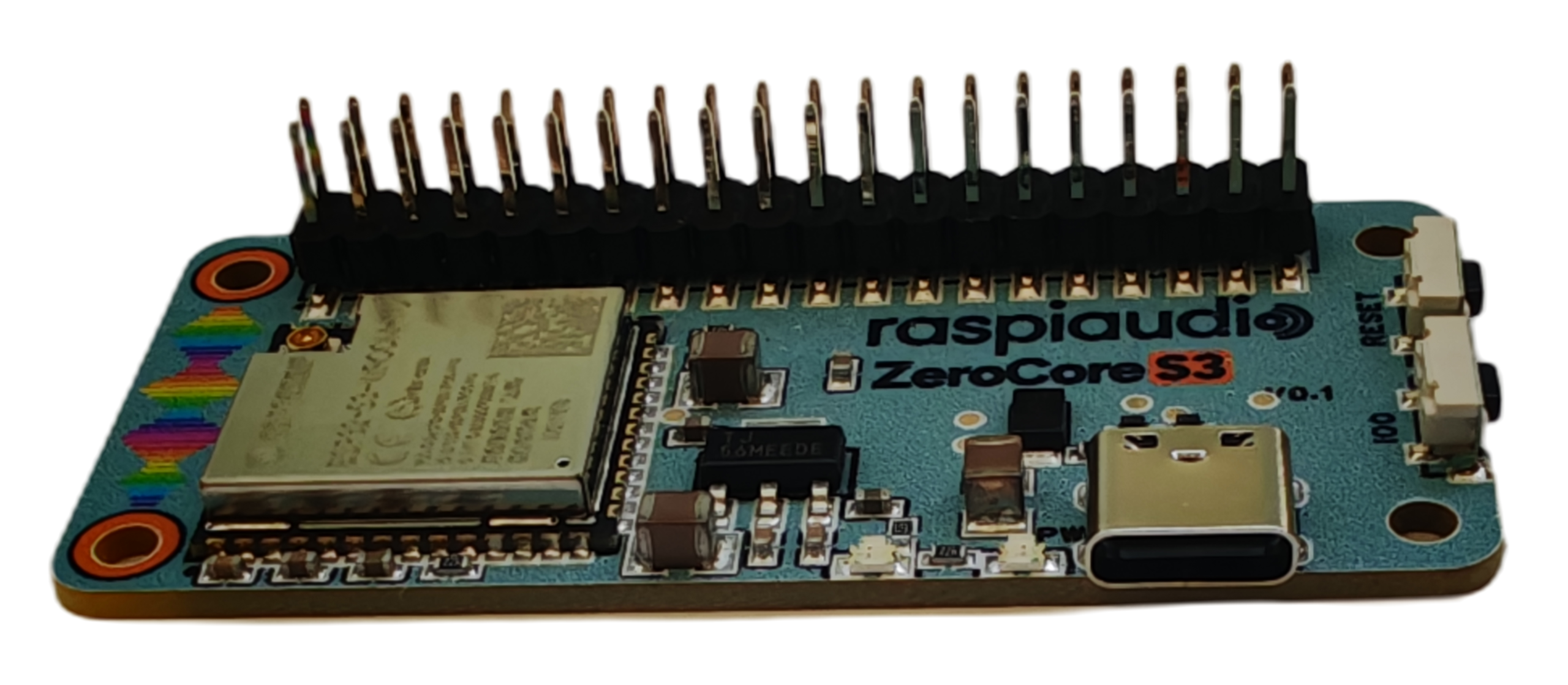
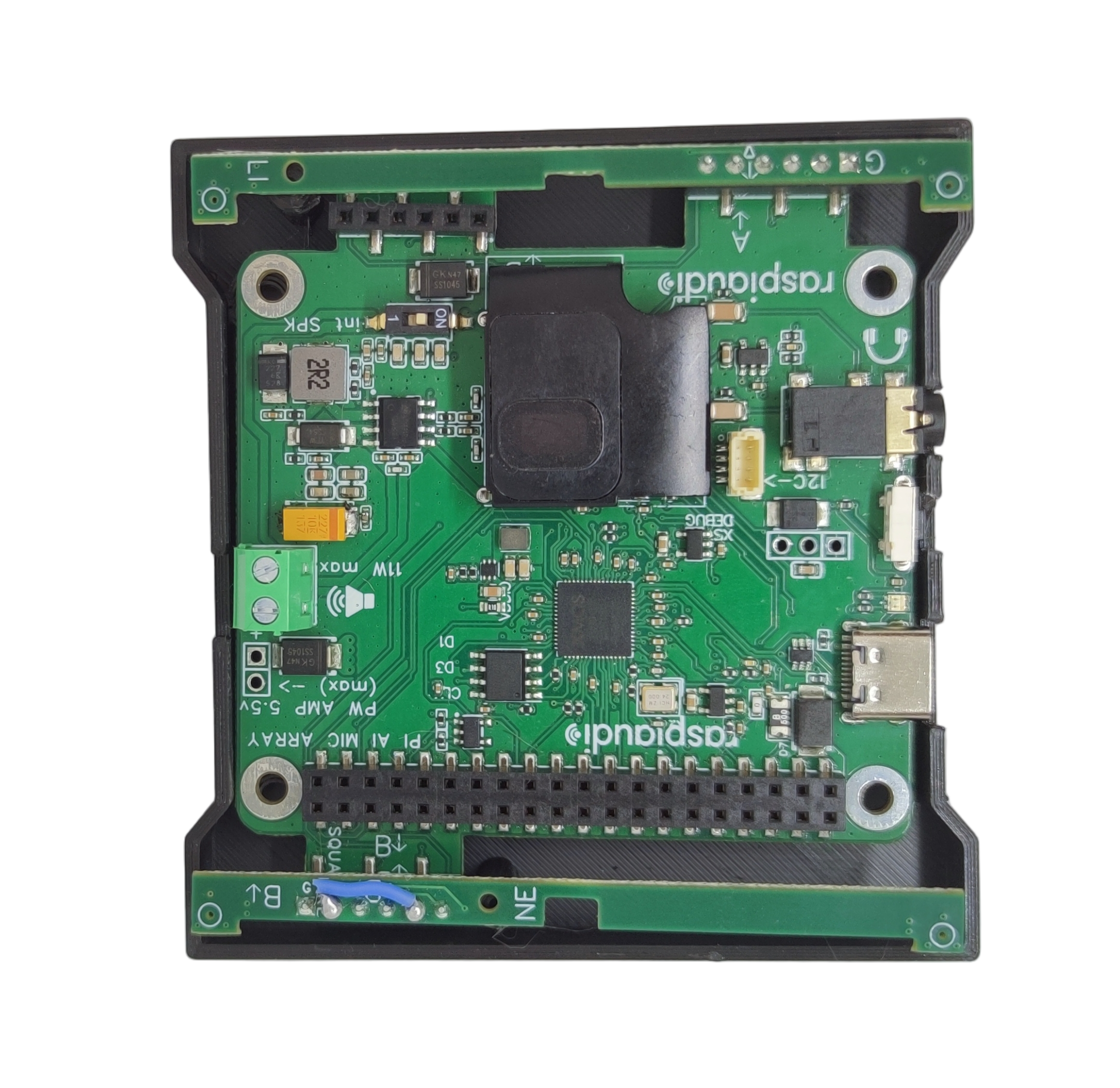
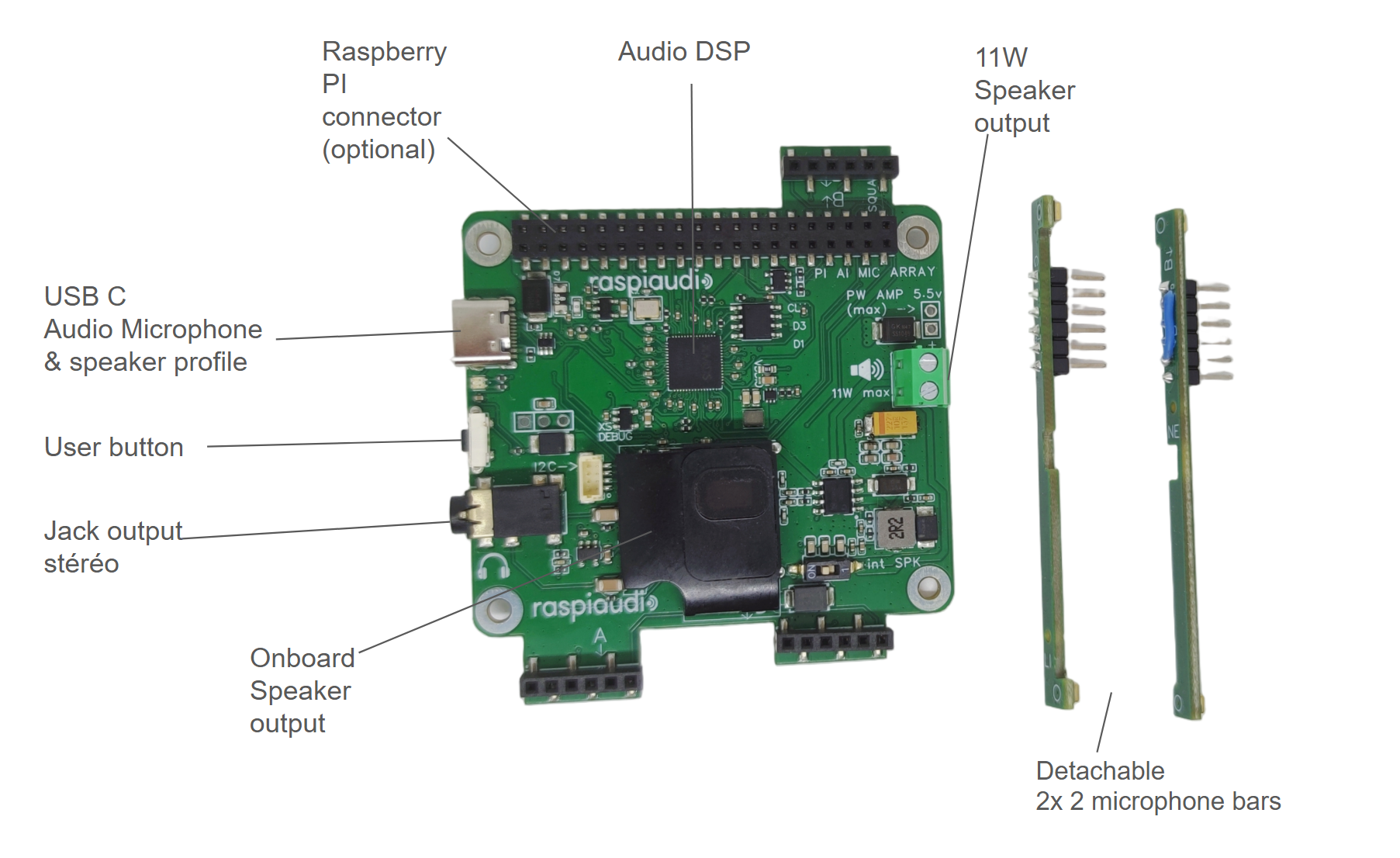
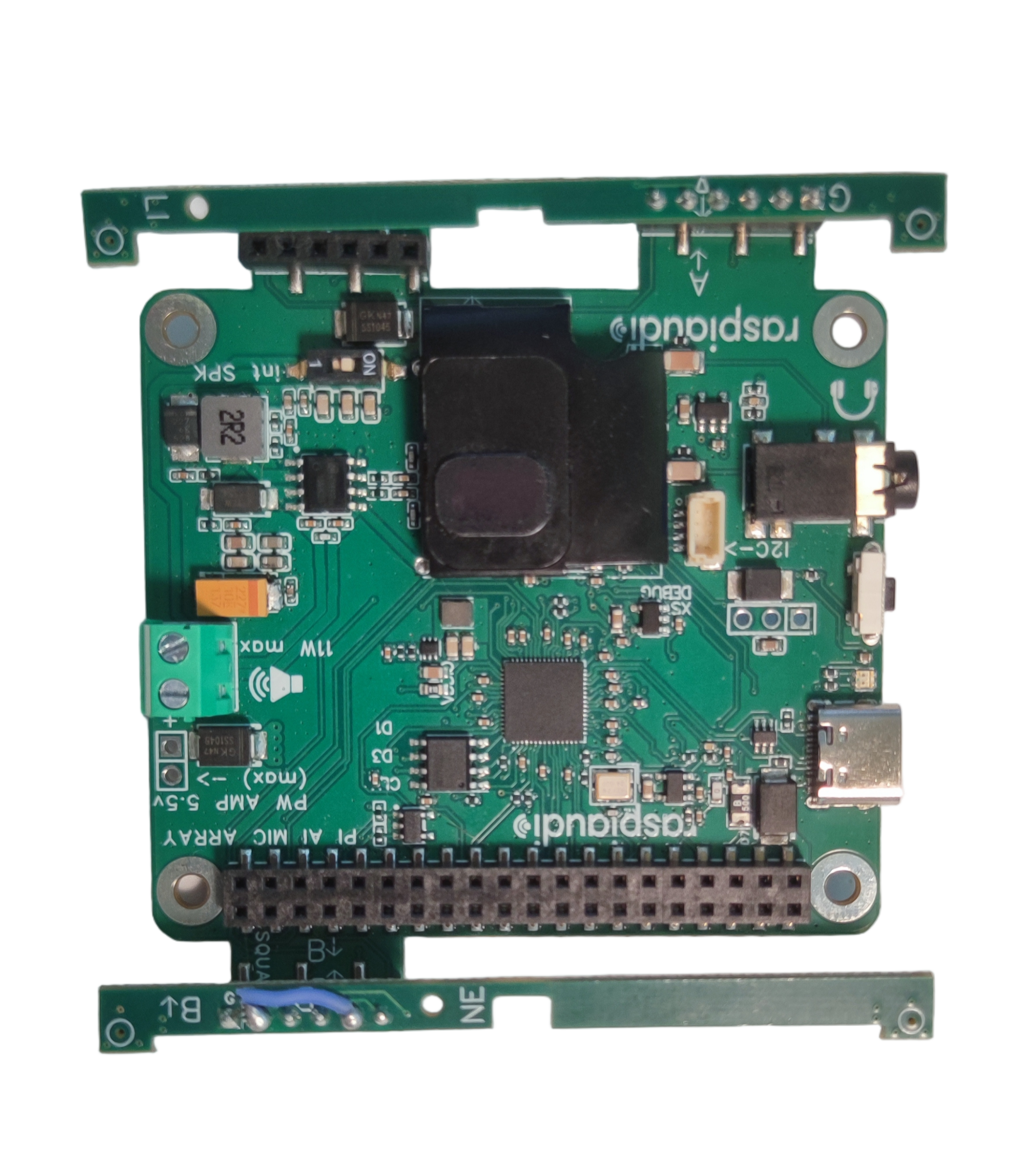
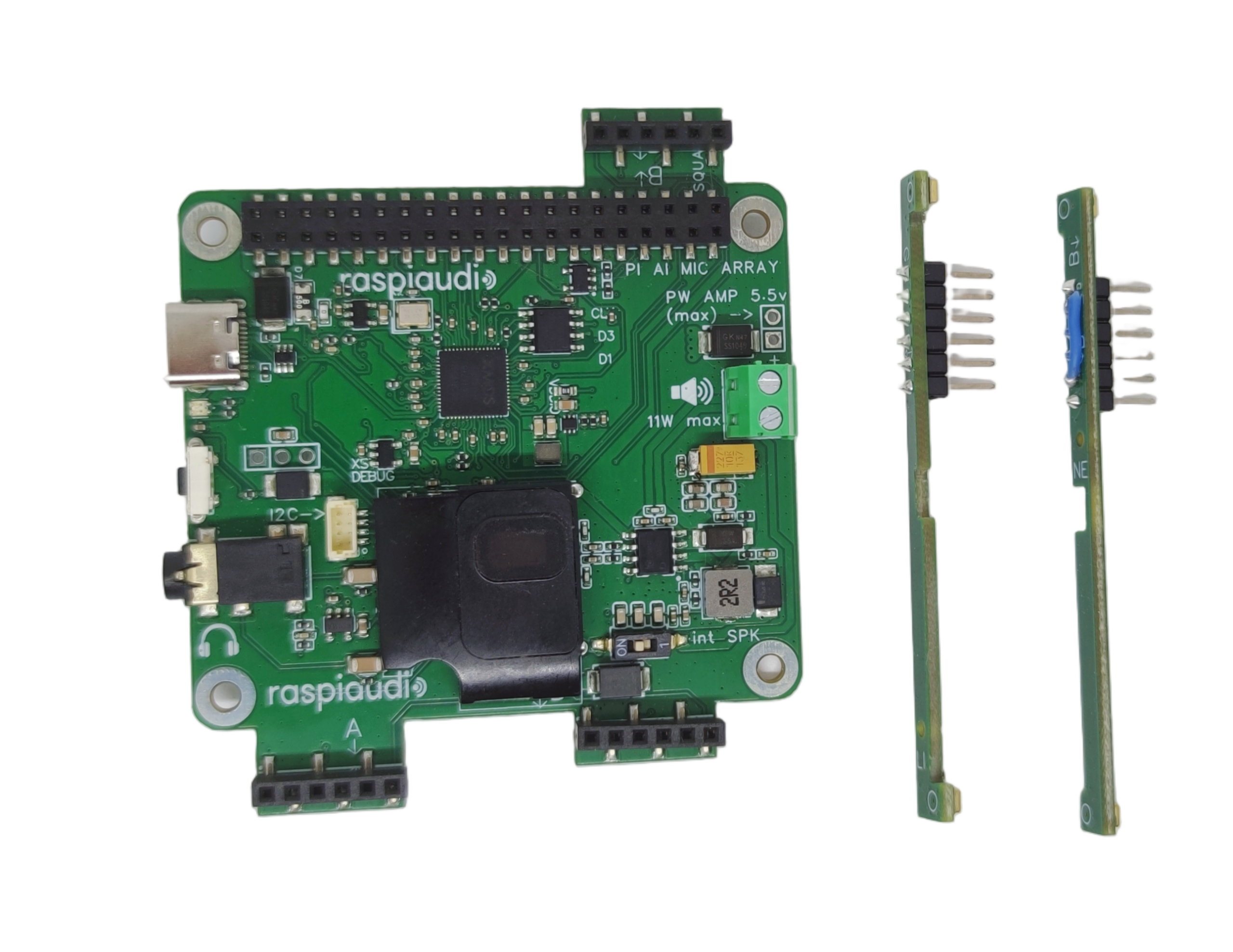
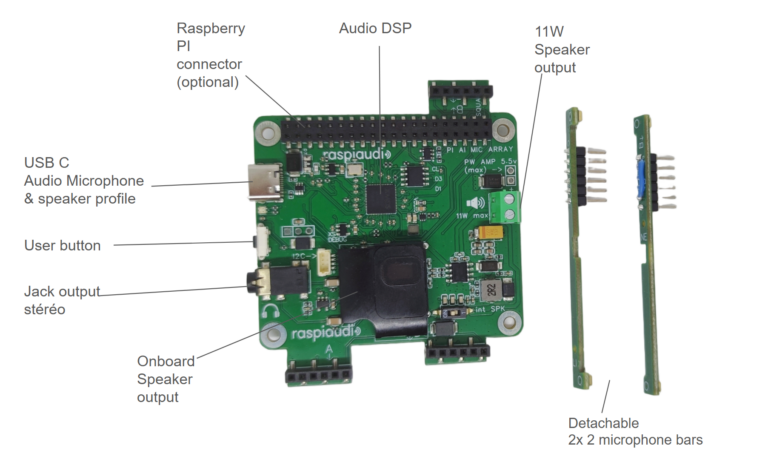
The main board combines capture, real-time voice processing and audio playback. The two microphone boards can be detached and repositioned.
The main board, all four microphones and the slim enclosure are included. Add a USB-C cable and you are ready to start in USB mode.
The complete sound card with XMOS voice DSP, USB and Raspberry Pi interfaces, onboard speaker, stereo headphone output and external speaker amplifier.
Two detachable microphone bars, each carrying two digital microphones: four microphones in total, ready for LINE or SQUARE geometry.
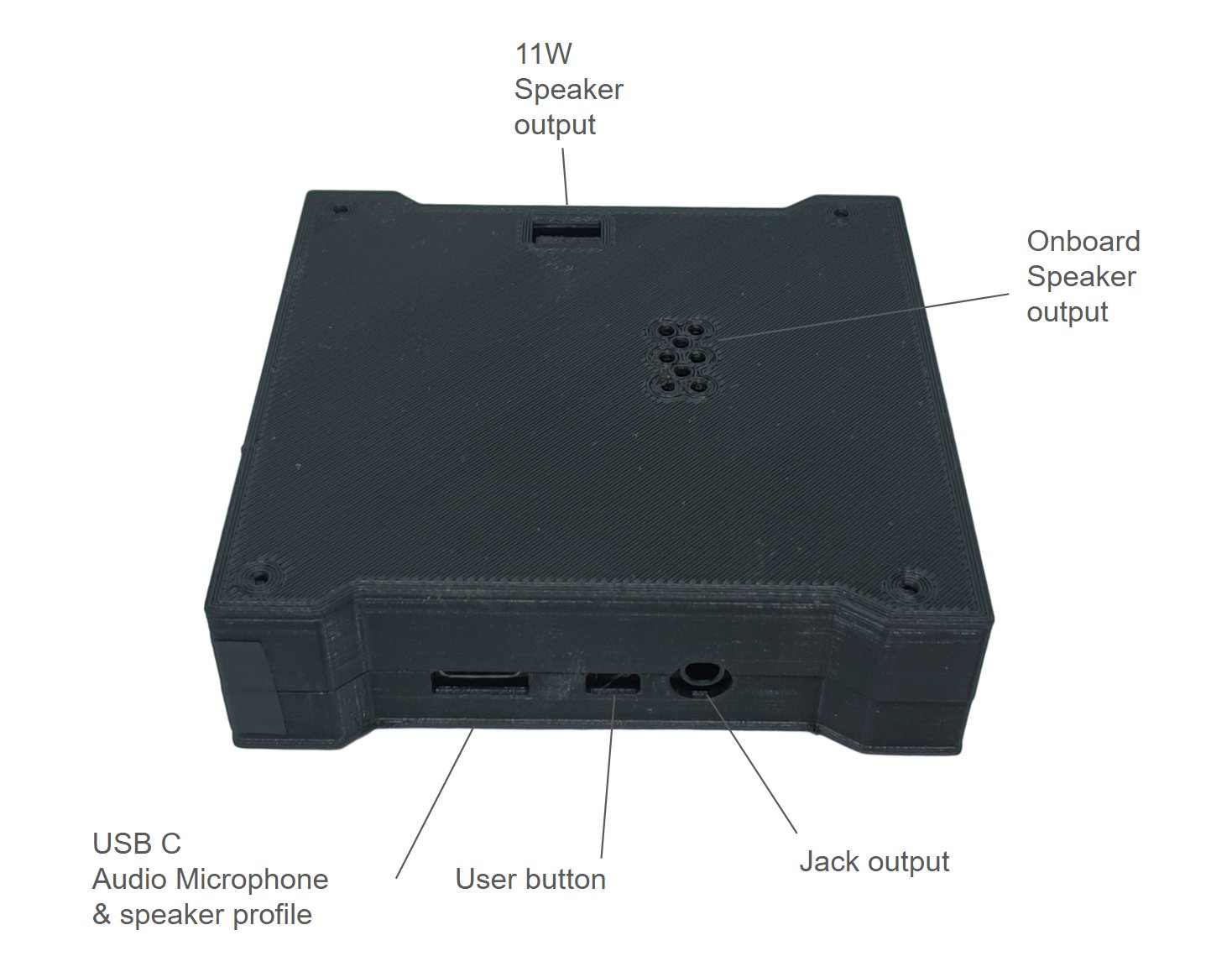
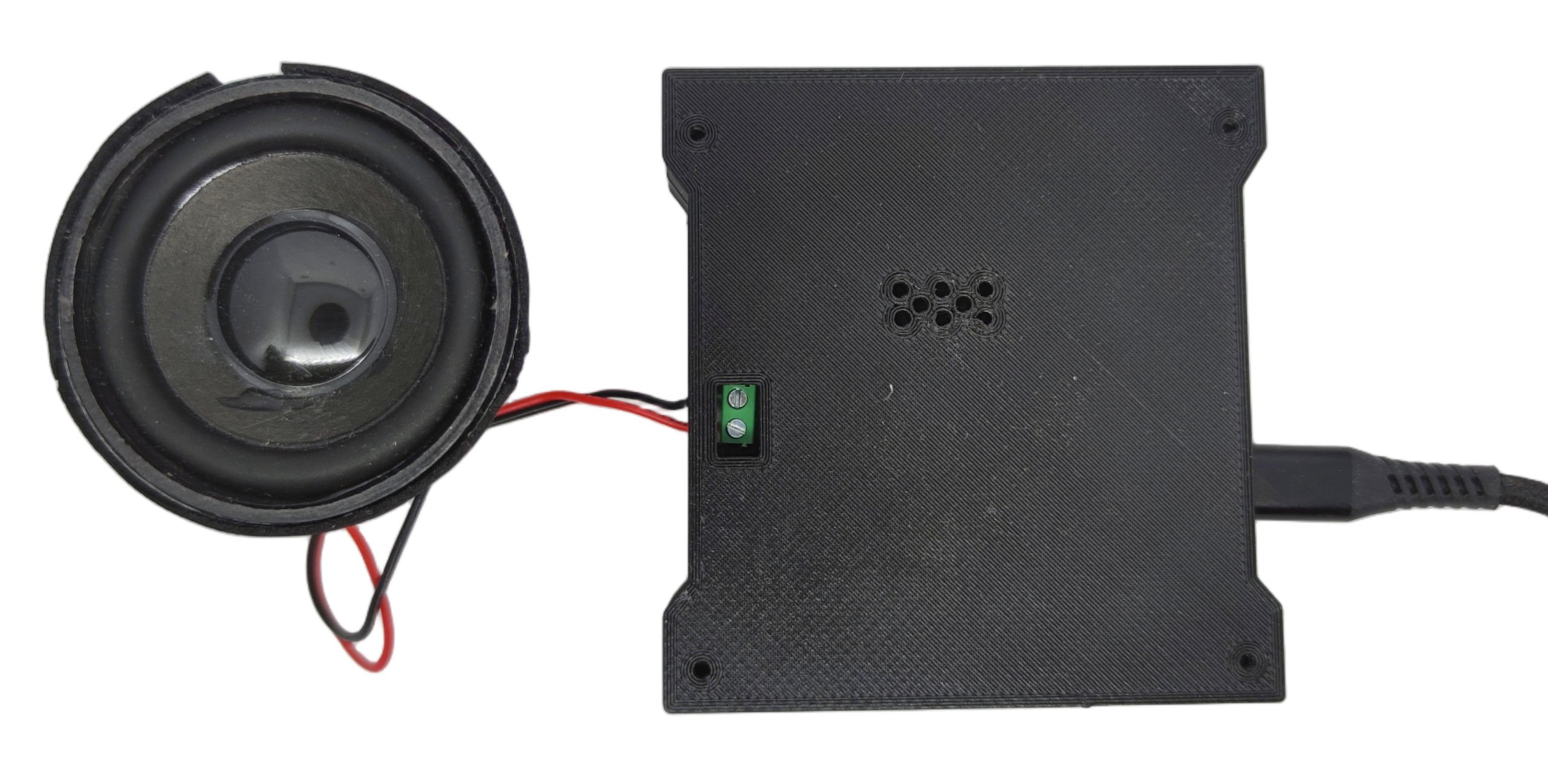
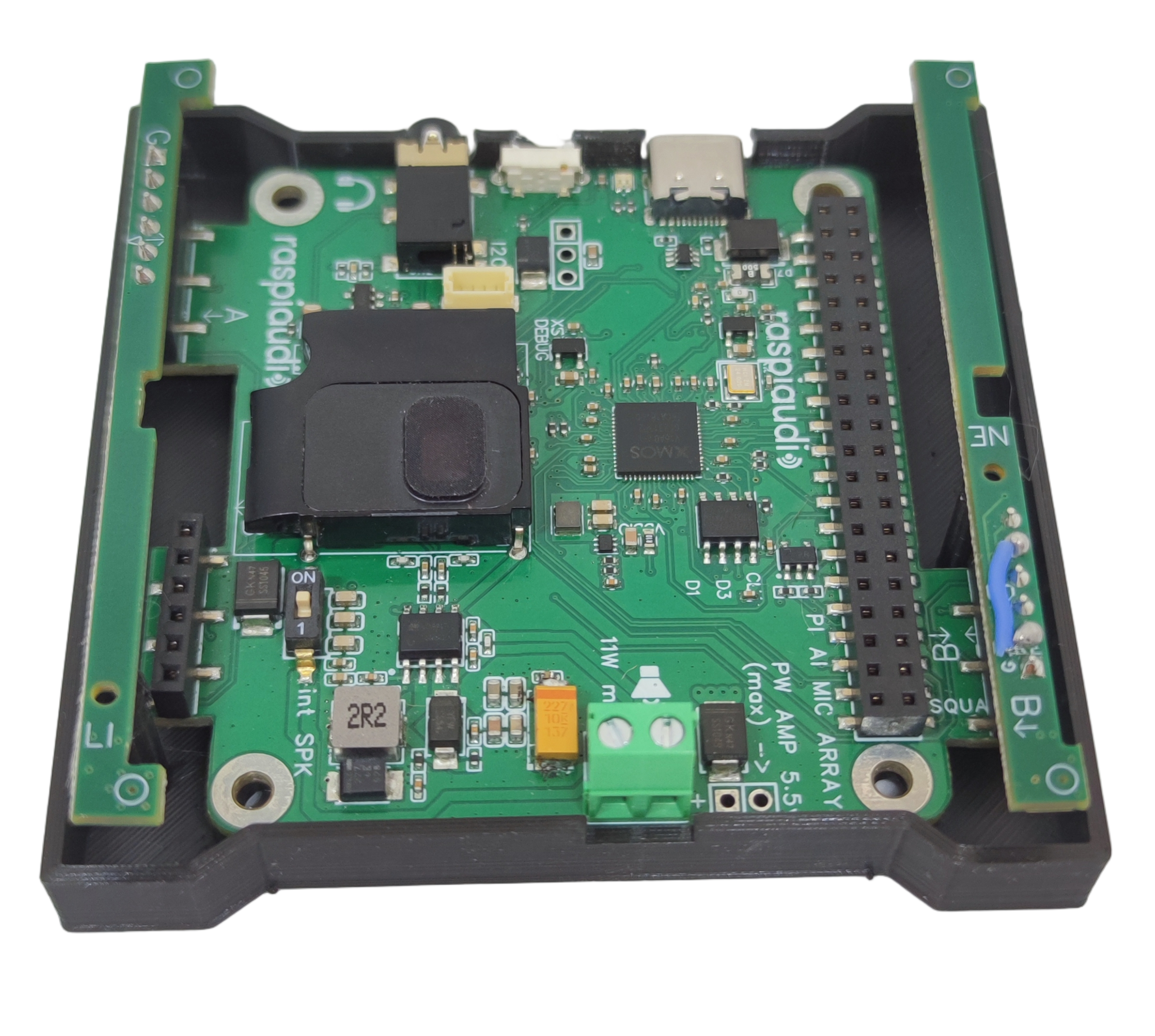
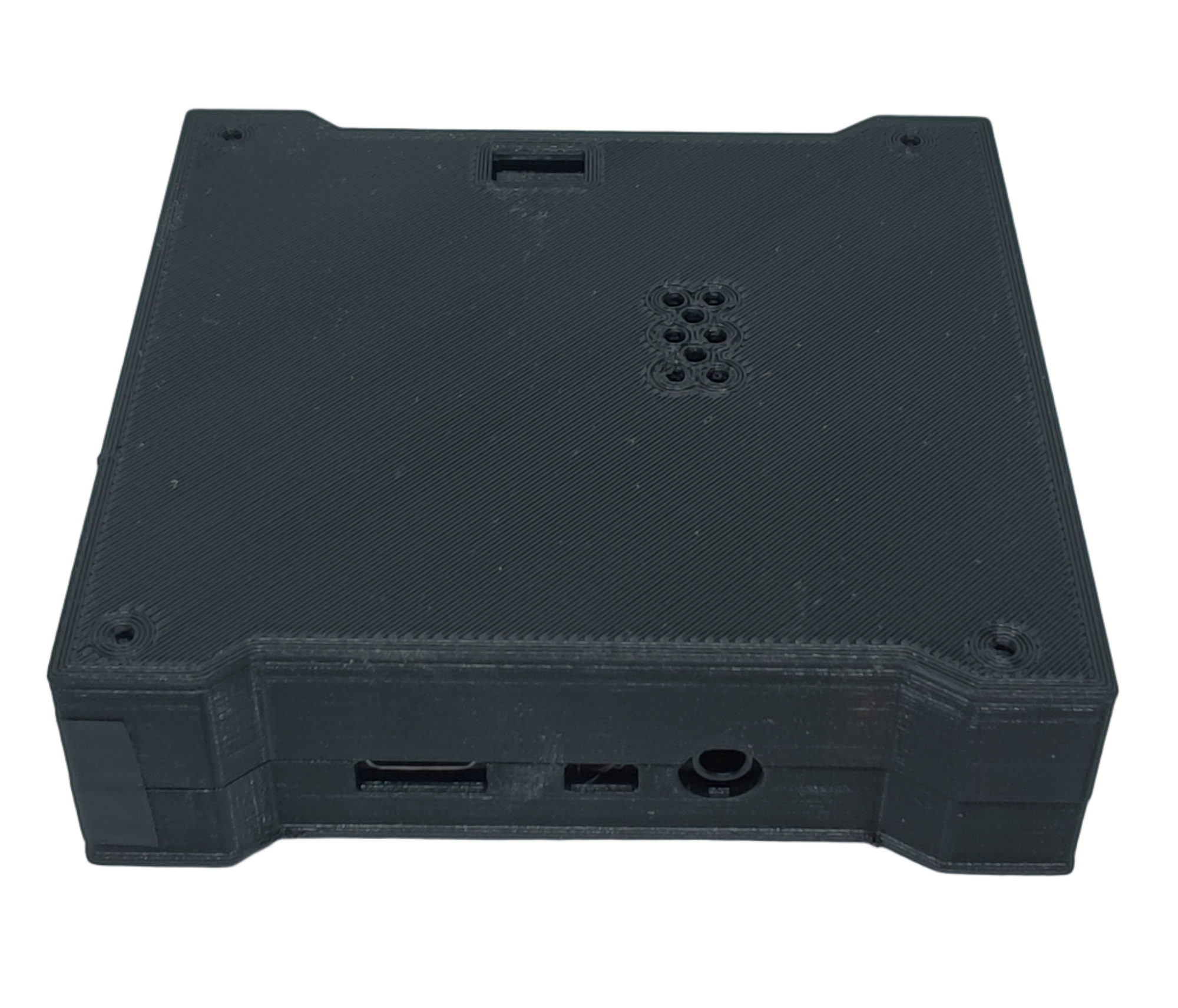
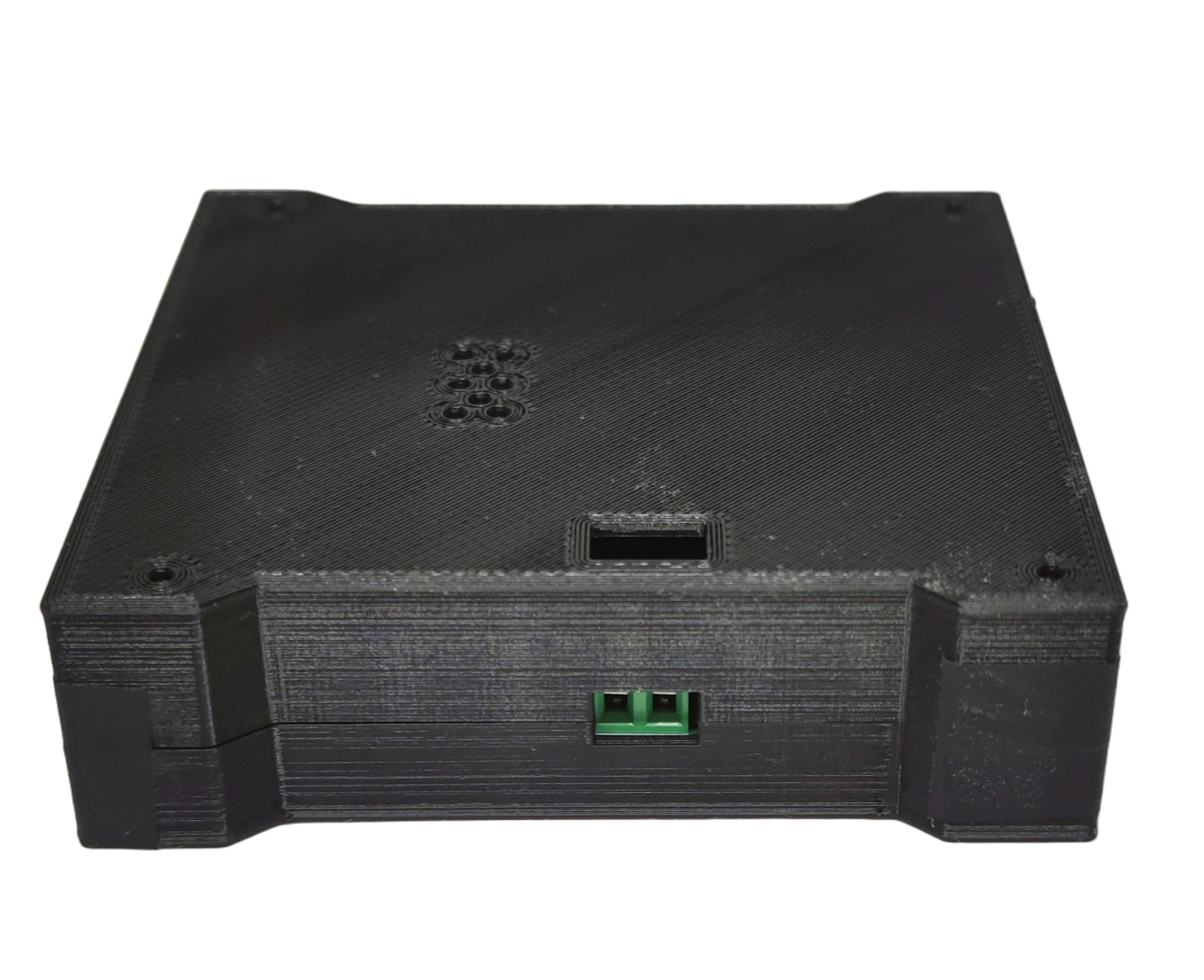
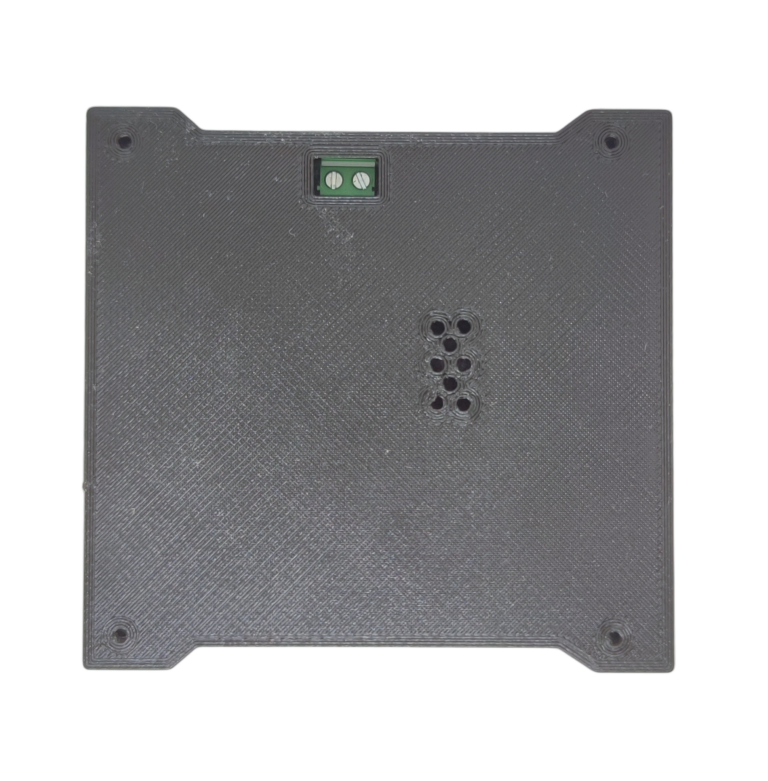
A compact enclosure designed for a clean, protected and ready-to-demonstrate USB build.
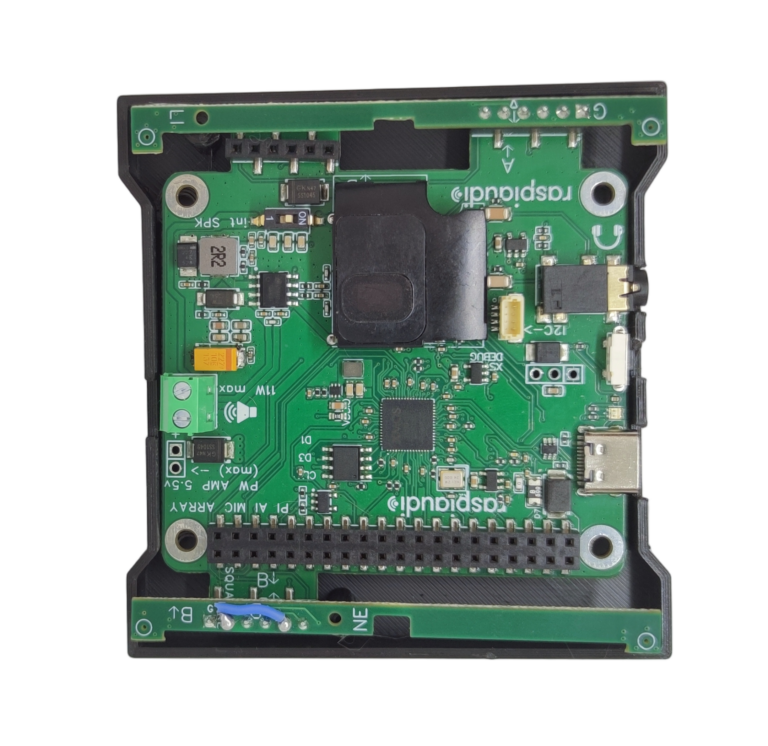
Included: Voice DSP+ main board, two detachable two-microphone boards and slim 3D-printed case. Raspberry Pi, USB cable, external speaker, LED ring, laser sensor and extension components are not included unless explicitly listed for another bundle.
| Voice processor | XMOS XVF3800 programmable voice DSP. |
|---|---|
| Microphones | Four digital microphones on two detachable two-microphone modules. |
| Microphone geometry | LINE or SQUARE; automatically detected and configured at cold boot. |
| Voice processing | Beamforming, acoustic echo cancellation (AEC), noise processing, automatic gain control (AGC) and direction of arrival (DoA). |
| USB audio | USB Audio Class, 48 kHz recommended firmware, two processed microphone channels and stereo playback. No product-specific driver required on current Windows, macOS or Linux systems. |
| Raspberry Pi audio | Direct I2S through the 40-pin header; recommended firmware uses 16 kHz with two processed capture channels and two playback channels. An advanced 48 kHz profile is also published. |
| Host interfaces | I2S audio, SPI firmware boot and I2C host control at address 0x2c in Raspberry Pi mode. |
| Audio outputs | Mono differential speaker path and stereo headphone output. Inserting a headphone jack automatically mutes the speaker amplifier in the validated firmware. |
| User controls | Onboard user button; the recommended USB firmware sends Ctrl+Shift+D while the button is held. |
| Visual feedback | Status LEDs plus support for an optional 24-pixel WS2812B direction-of-arrival ring. |
| Firmware resources | Validated USB and Raspberry Pi firmware files, checksums and setup instructions are published on GitHub. |
The public repository includes installation scripts, validated firmware, hardware documentation, pinout and integration diagrams, checksums, Raspberry Pi integration and the board-specific source overlay.
Check pinout, firmware and integration on GitHubNo. USB mode works directly with a current Windows, macOS or Linux computer. A Raspberry Pi is only needed for the advanced embedded mode.
No product-specific driver is required on current Windows, macOS or Linux systems. Select the board as both the microphone and speaker in your application.
No. Power the board off before changing the microphone modules. The selected geometry is detected only at cold boot.
The public repository includes RASPIAUDIO’s board-specific source overlay, firmware, installer and documentation. The complete XMOS SDK is distributed separately under XMOS licensing.
Get a premium voice experience out of the box, then keep the same hardware when your prototype becomes a fully integrated product.
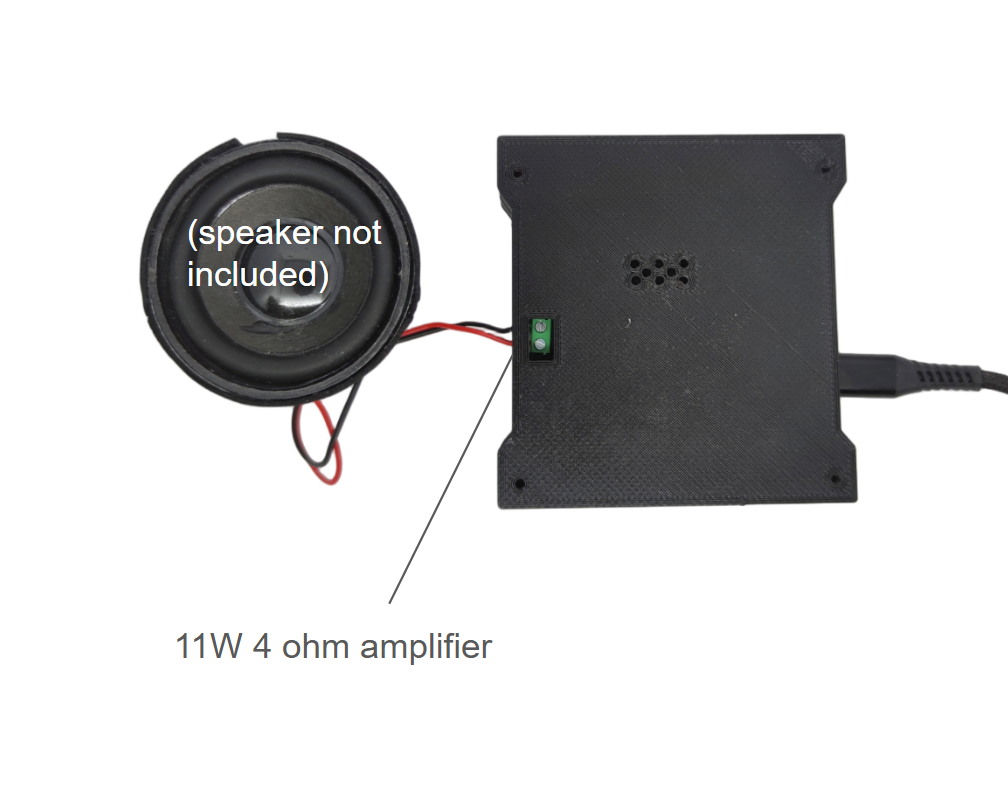
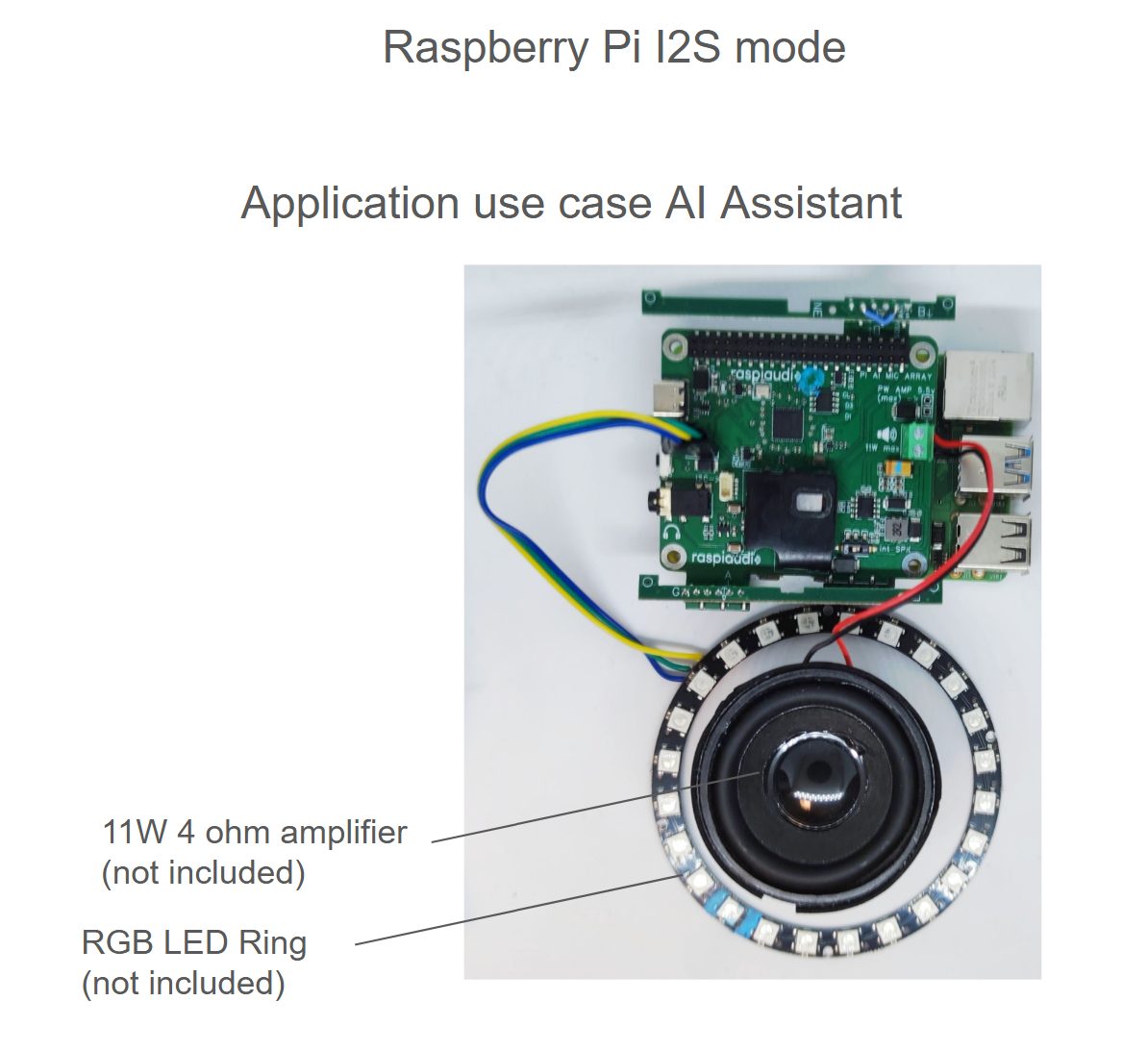
Add a more powerful speaker and a laser time-of-flight range sensor to create a dedicated voice assistant. In this example, passing a hand above the sensor triggers the configured ChatGPT dictation control, then Voice DSP+ captures processed speech for transcription.
The higher-power speaker and laser range sensor are extension components for this example build.
This video will show USB setup, hand detection, ChatGPT dictation activation and the complete listen-and-reply experience.