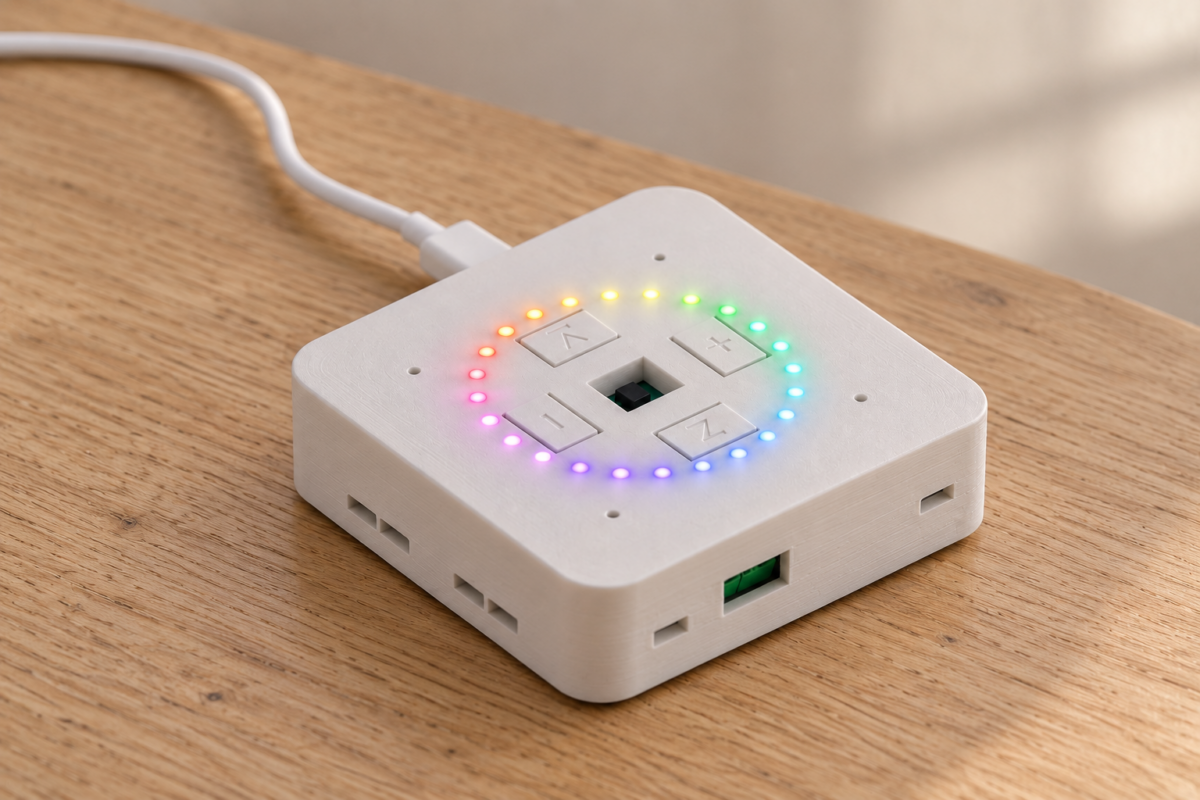
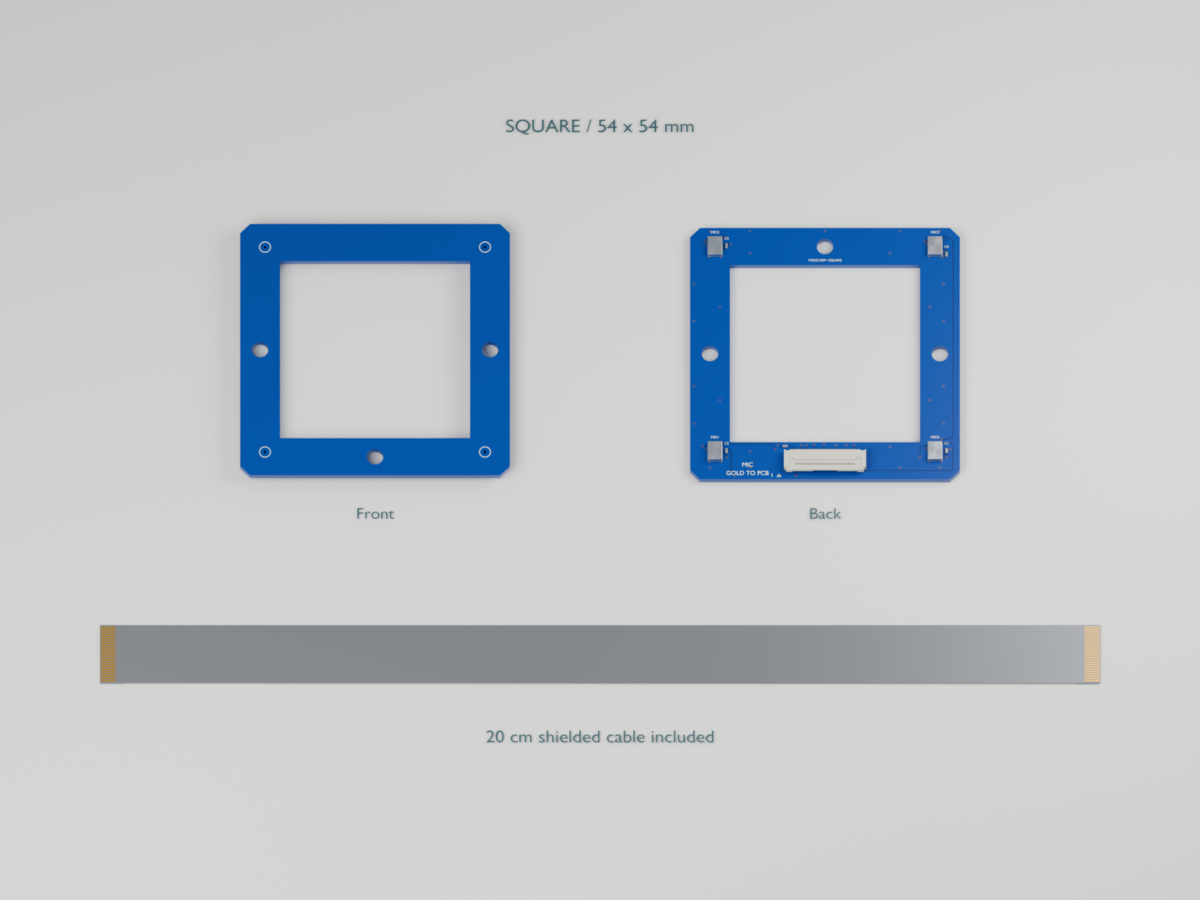
Voice DSP+ / Optional microphone extension
LINE array.
Put the microphones where you need them.
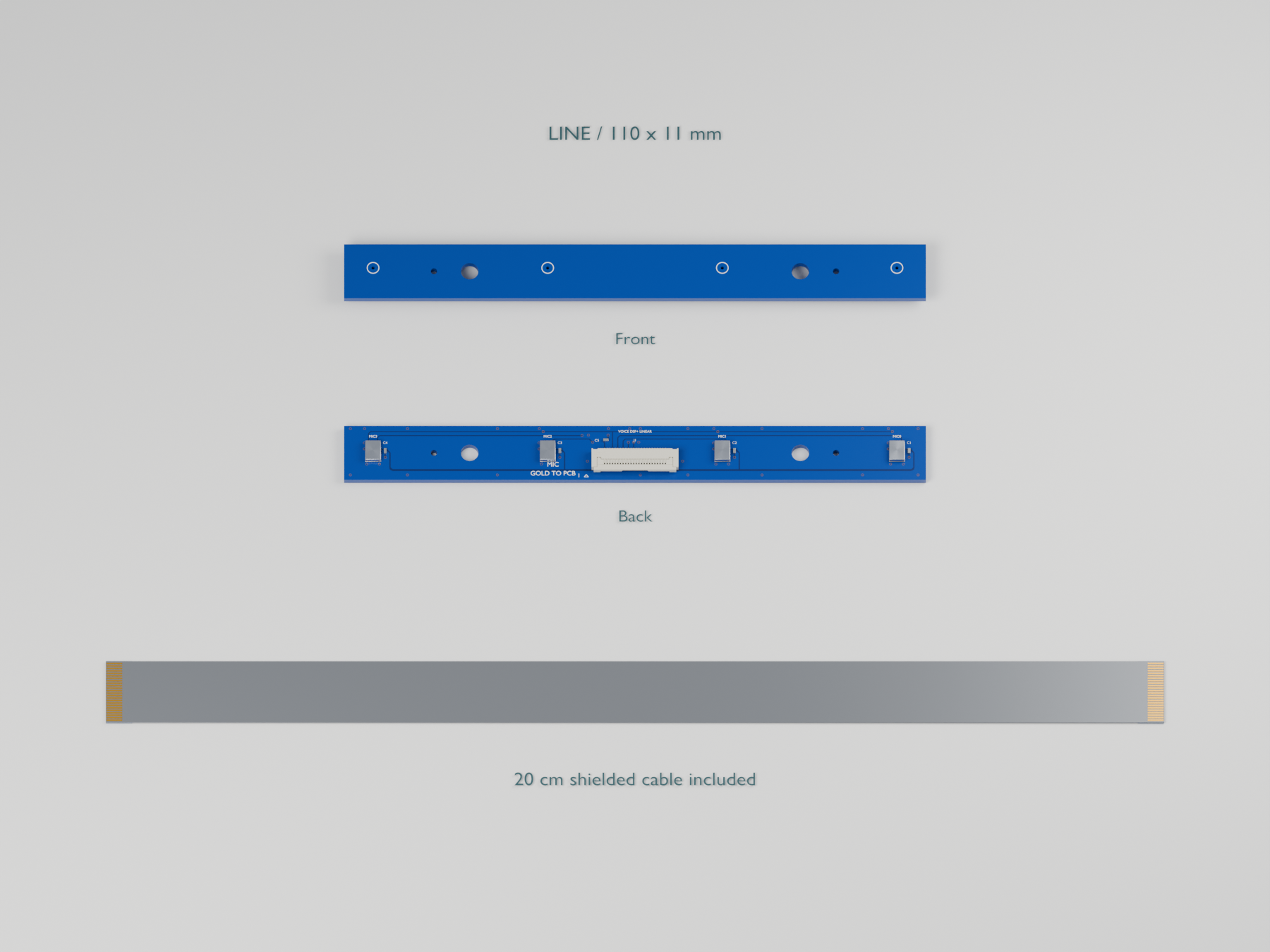
Move the four-microphone capture array away from the Voice DSP+ V2 main board and into the right position in your enclosure. This LINE extension includes its 20 cm shielded ribbon cable.
For robots, kiosks, displays, intercom front panels and slim enclosures.
€19.90 per kit. Preorder. Dispatch schedule to be confirmed. Not for immediate dispatch. Voice DSP+ main board sold separately.
More freedom for your enclosure
Keep the processing electronics where they fit, and place the microphone array where voices can reach it. The LINE geometry is intended for front-facing placement, with a matching microphone profile in the Voice DSP+ firmware.
The extension relocates the active four-microphone array. It does not add a second simultaneous four-channel capture system.
In the box
- One LINE extension PCB with four digital MEMS microphones.
- One 20 cm shielded ribbon cable for the microphone connection.
Voice DSP+ main board, host/controller, enclosure, fasteners and speakers are not included.
Shielded cable included
The supplied 20 cm ribbon connects the external array to the Voice DSP+ V2 microphone interface. Shielding helps limit electromagnetic interference on the microphone link. It does not replace careful routing, correct grounding or acoustic isolation.
Keep the ribbon away from high-current speaker wiring and power converters where possible. Power down before connecting, and follow the connector orientation and locking instructions for the final kit.
Premium microphone capture
Sensitive to voice.
Quiet by design.
Four premium digital MEMS microphones combine low self-noise with precisely matched sensitivity for clean voice capture. The high signal-to-noise ratio helps preserve quieter speech before the Voice DSP+ processes the audio.
- 70 dBA typical signal-to-noise ratio over 20 Hz–8 kHz in normal mode.
- −37 dBFS typical sensitivity, ±1 dB tolerance at 94 dB SPL / 1 kHz in normal mode.
- 128 dB SPL acoustic overload point at 1 kHz / 10% THD.
Microphone component specifications, not whole-system measurements. Pickup depends on placement, enclosure and firmware. Manufacturer datasheet.
Technical overview
| Layout | LINE, four digital microphones |
|---|---|
| PCB outline | approximately 110 × 11 mm, based on the supplied 3D export |
| Acoustic geometry | 33 mm between adjacent acoustic ports; 99 mm across the four-port line |
| Connection | 24-position FPC microphone interface; supplied matched ribbon cable |
| Included cable | 20 cm, shielded |
| Audio processing | Handled by the Voice DSP+ main board’s XVF3800 DSP, not by a second DSP on this extension |
| Compatibility | Voice DSP+ V2 external-array interface with matching LINE firmware profile. No claim of compatibility with V1 boards or other manufacturers’ pinouts. |
Before integrating
- Keep all four acoustic ports unobstructed and facing the intended listening space.
- Select the firmware profile for this array geometry.
- Use either the internal array or one external array at a time.
- Plan mechanical decoupling from the speaker and enclosure vibrations.
- For Compact Voice or Full Speaker, custom cable routing or enclosure changes may be required; this is a maker accessory.
Preview specification for review. V2 integration and the final assembly guide are in progress. Capture performance depends on placement, enclosure and firmware; no guaranteed distance or angular rejection figure is claimed.